
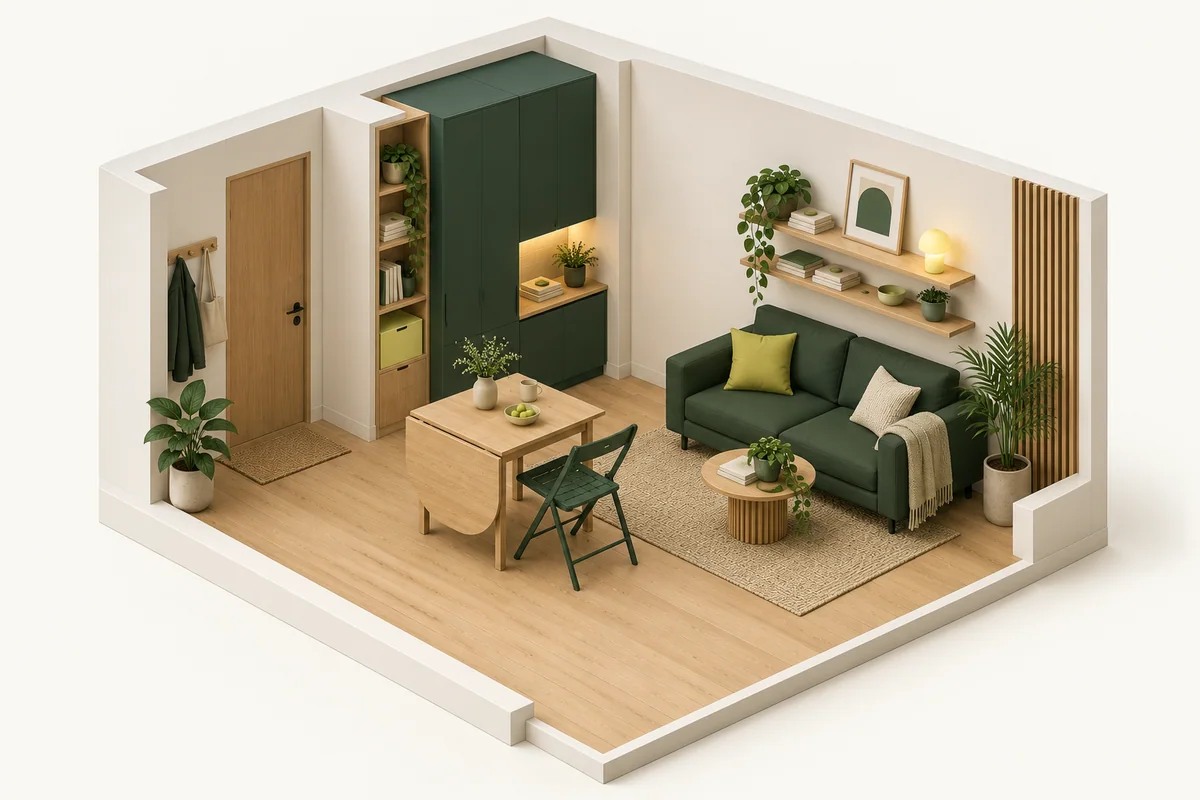
Transforming furniture saves space only when it is easy enough to fold, move, nest, and store during real daily life.
The quick answer: Compare open, transitioning and stored dimensions. Folding saves usable floor area only when the folded item and everything removed from it have a workable storage place.
Plan these three things first.
Record the complete open footprint and the folded or nested storage dimensions.
02Preserve the pathwayA temporary table still needs seating clearance and a safe route around it.
03Match stability to the jobA snack tray, laptop surface, dining table, and craft station place different forces on furniture.
Measure both states
Record the complete open footprint and the folded or nested storage dimensions. Include legs, hinges, leaves, chairs, handles, and wall clearance. Make sure the stored product does not become a new obstacle.
Preserve the pathway
A temporary table still needs seating clearance and a safe route around it. Test the layout with tape or boxes and check doors, drawers, appliances, windows, and exits in the furniture's fully open position.
Match stability to the job
A snack tray, laptop surface, dining table, and craft station place different forces on furniture. Follow listed weight limits and locking instructions, and avoid putting unstable equipment or hot appliances on a surface not designed for them.
Count the transformation cost
Consider where loose chairs or leaves go, how heavy the product is, and how often one person must change the setup. The best design is not the one that folds most dramatically; it is the one the household will actually reset.
Make the decision concrete
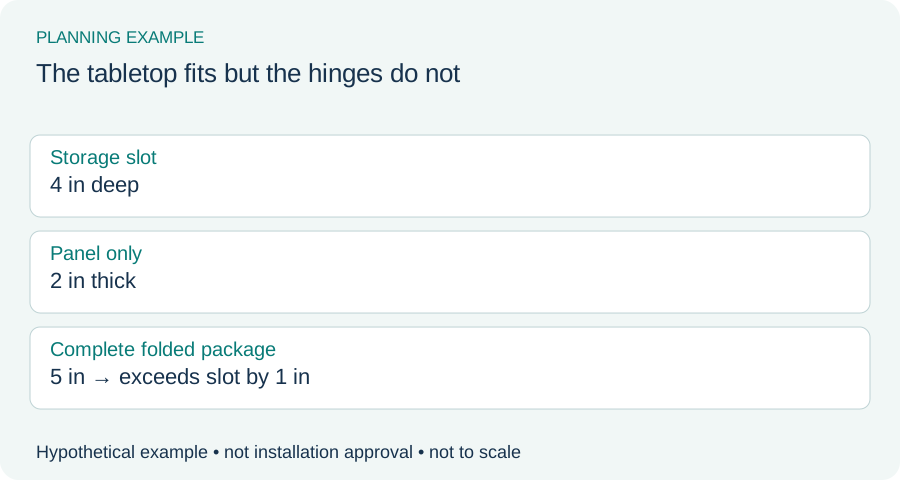
Example: the tabletop fits but the hinges do not
Hypothetical storage slot: 4 inches deep. The tabletop panel is 2 inches thick, but the folded legs and hinges make the complete package 5 inches deep. It exceeds the slot by 1 inch. Check insertion and removal, then test the opening sweep and locking routine separately. Do not remove a brace to make the folded package smaller.
| Check | Record | Watch for |
|---|---|---|
| Open | Top, legs, seating and working access | Only tabletop outline measured |
| Transition | Opening sweep and locking instructions | Furniture must collide with another object to unfold |
| Stored | Full folded envelope and equipment storage | Legs or hinges omitted from thickness |
Try your measurements
Check one dimension at a time
Use the same direction for all three inputs: width, depth or height. Add all required extra space on that axis, including movement and manufacturer clearance. Repeat for the other axes and check obstructions separately.
Enter all three measurements. Leave required extra space blank if it is unknown; do not assume zero.
Available space − product body − required extra space = space remaining
See the measurements
Real products to compare with your space
These examples make the size tradeoffs easier to see. Open a product page for the complete fit verdict, setup notes, and retailer options.
COSCO 37129BLK10L
A temporary laptop or project table that stores nearly flat
View fit detailsMainstays Walnut Folding Trays
Meals, laptops, and crafts beside a sofa with almost no permanent footprint
View fit detailsWinsome Alex 42290
A more furniture-like folding tray that can serve two people
View fit detailsDo this before placing the order.
- Measure the destination. Include the full usable width, depth, height, and every fixed obstruction.
- Measure the working position. Add door, lid, hose, ventilation, loading, and walking clearance.
- Measure the route. Check doors, halls, stairs, elevators, corners, and the storage opening.
- Verify the exact model. Compare the manufacturer documentation with the listing before buying.
What this guide cannot decide
This guide cannot verify structural condition, stability, weight capacity, accessibility, child safety, or safe use for a particular activity without the product instructions.