
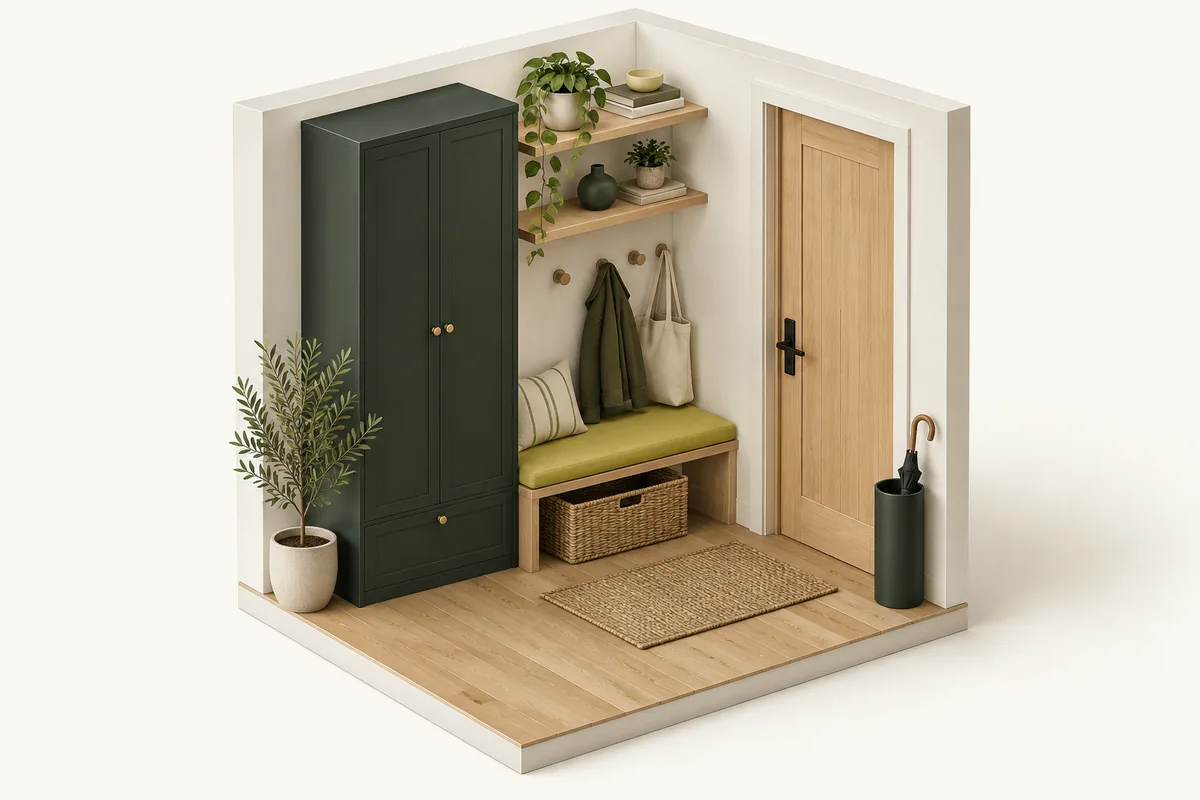
A studio is not one static floor plan. The same area may become a bedroom, office, dining room, and guest space across one day, so furniture must fit every important mode and the movement between them.
The quick answer: Draw sleeping, working and eating modes, including where movable pieces go between them. Count the transitions as well as the square footage.
Plan these three things first.
Measure walls, windows, doors, closets, radiators, vents, outlets, kitchen edges, and bathroom access.
02Create a plan for each room modeSketch sleeping, working, eating, and guest arrangements separately.
03Give movable furniture a parking placeNesting tables, folding desks, chairs, and rolling carts still occupy space when not in use.
Draw the permanent boundaries
Measure walls, windows, doors, closets, radiators, vents, outlets, kitchen edges, and bathroom access. Mark the routes that must stay open regardless of how furniture changes.
Create a plan for each room mode
Sketch sleeping, working, eating, and guest arrangements separately. Add open chairs, drawers, cabinet doors, folding paths, and the space people occupy. A layout is not complete until each mode works.
Give movable furniture a parking place
Nesting tables, folding desks, chairs, and rolling carts still occupy space when not in use. Measure their full stored size and make sure one person can move them through the room without clearing another zone first.
Use edges without crowding them
Walls, corners, and under-bed areas are useful storage zones, but doors, curtains, baseboards, plugs, headroom, and the bed's access side limit them. Preserve visual breathing room where it also supports movement.
Test the daily transitions
Walk through waking, dressing, working, cooking, eating, relaxing, and sleeping. Count how many items must move for each transition. The strongest plan reduces repeated lifting and gives every movable piece a clear destination.
Make the decision concrete
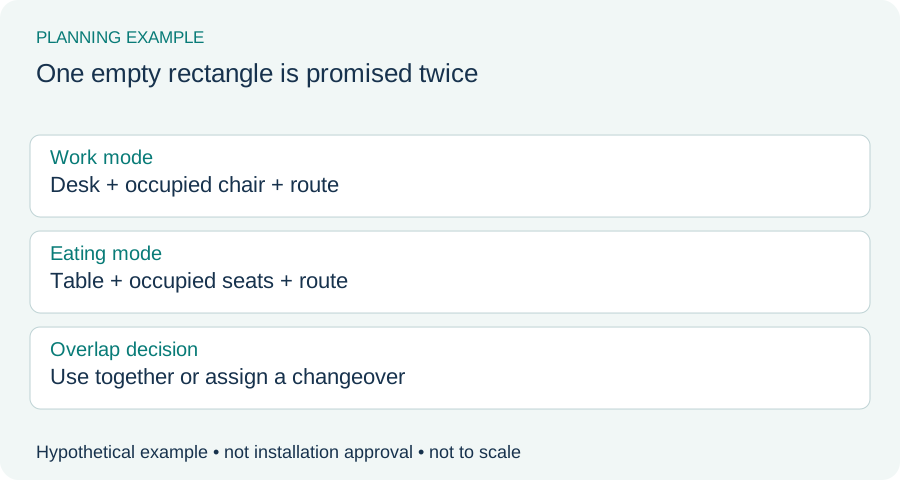
Example: one empty rectangle is promised twice
The same open rectangle is assigned to a pulled-back work chair and a dining chair in two separate sketches. If both will be used at once, those sketches do not describe a working layout. Mark both occupied positions on one plan. If use will alternate, assign a parking location for each chair and test the changeover before choosing furniture.
| Check | Record | Watch for |
|---|---|---|
| Fixed boundaries | Doors, vents, kitchen and bathroom routes | Only furniture rectangles drawn |
| Simultaneous use | Every occupied chair and opened drawer | One empty zone allocated twice |
| Transitions | Parking place and moves between room modes | Folding assumed to make equipment disappear |
See the measurements
Real products to compare with your space
These examples make the size tradeoffs easier to see. Open a product page for the complete fit verdict, setup notes, and retailer options.
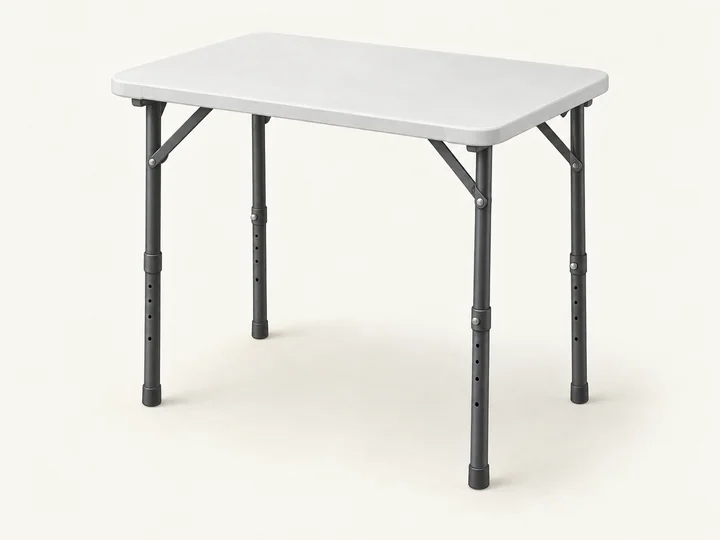
COSCO 37129BLK10L
A temporary laptop or project table that stores nearly flat
View fit details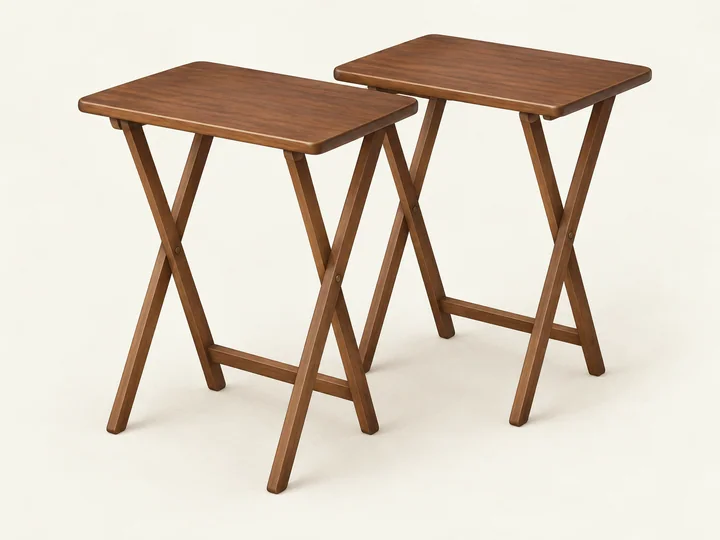
Mainstays Walnut Folding Trays
Meals, laptops, and crafts beside a sofa with almost no permanent footprint
View fit details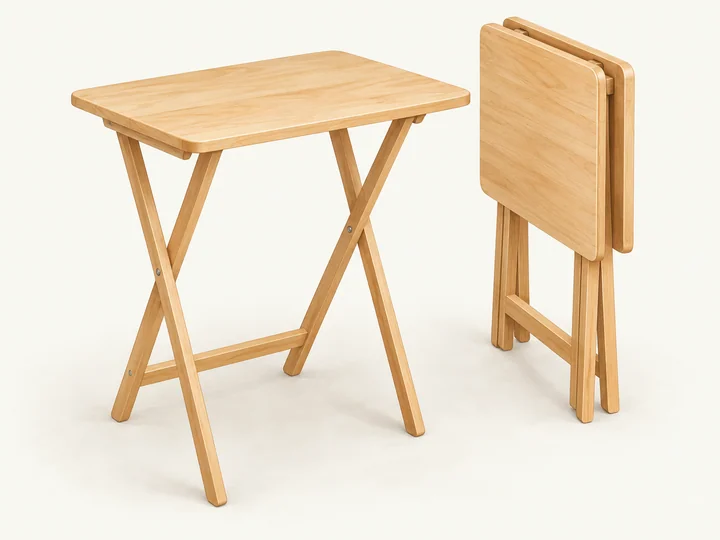
Winsome Alex 42290
A more furniture-like folding tray that can serve two people
View fit detailsDo this before placing the order.
- Measure the destination. Include the full usable width, depth, height, and every fixed obstruction.
- Measure the working position. Add door, lid, hose, ventilation, loading, and walking clearance.
- Measure the route. Check doors, halls, stairs, elevators, corners, and the storage opening.
- Verify the exact model. Compare the manufacturer documentation with the listing before buying.
What this guide cannot decide
This guide cannot verify building egress, accessibility, furniture stability, electrical placement, landlord permission, or the comfort of a specific layout.