
01
Real operating space
Measure the product, doors, drawers, hoses, airflow and the room your body needs to use it.
RV, van life & tiny-home buying hub
Build a more comfortable small home without filling it with products that cannot be powered, stored, opened, ventilated or secured. Start with the space and the way you live.
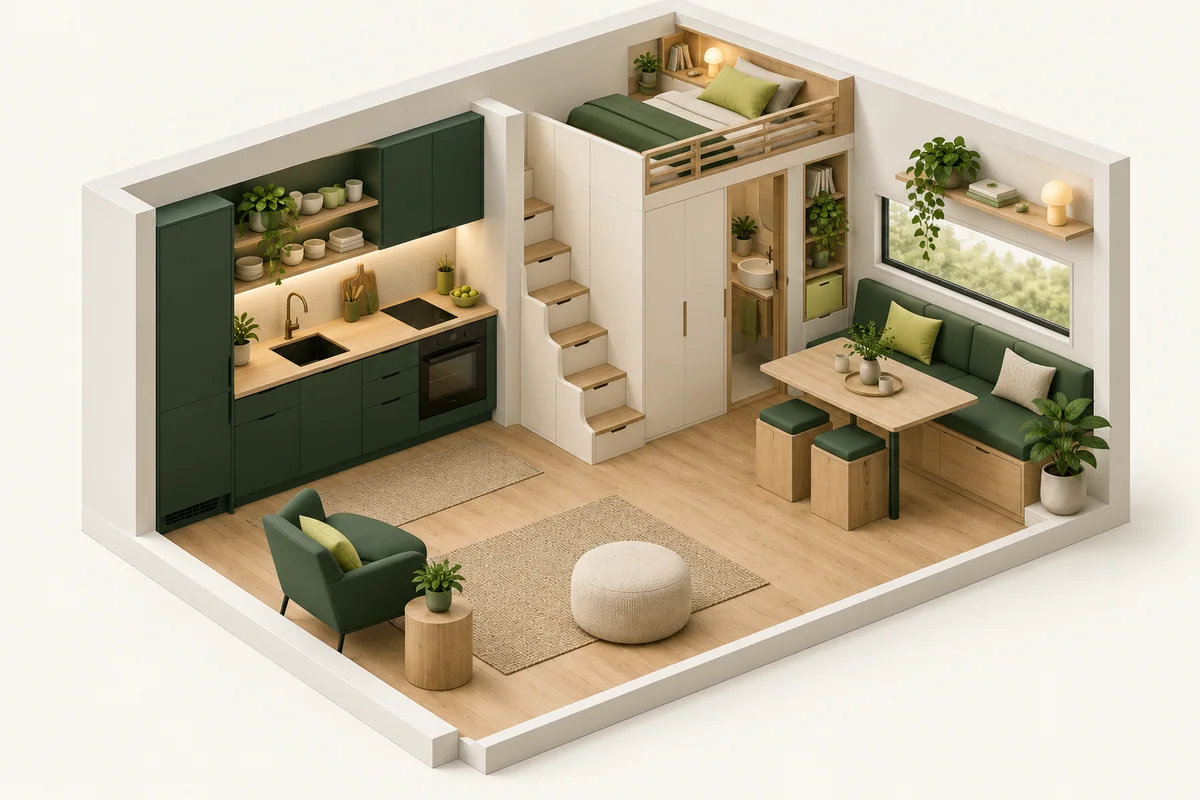
The compact-living difference
In a small stationary home or a rig on the road, floor space, power, weight, airflow and access overlap. These checks belong at the beginning of the purchase—not after delivery.
Measure the product, doors, drawers, hoses, airflow and the room your body needs to use it.
Compare rated electrical requirements with the circuit, shore power, generator or inverter and simultaneous loads.
Count the product, stored contents and accessories, then plan secure travel storage when the home moves.
Plan fresh water, drainage, humidity, condensation and wastewater only for products that create those demands.
Shop the whole small home
Each link opens the same dimension-aware finder with questions built for that product department.
Cook and clean without surrendering the entire counter.
Compare cabinet footprint, ventilation and room coverage.
Use gaps, cabinets, walls and corners more intentionally.
Create a surface when needed and reclaim the room afterward.
Fit storage into the zones that usually collect clutter.
Plan the full water, drainage, power and storage routine.
Different homes, different limits
Prioritize cargo capacity, secure travel storage, shore-power limits, tank use, vibration and a clear exit path.
Prioritize permanent clearances, ventilation, utility connections, moisture control and furniture that serves more than one job.
Prioritize the smallest possible footprint, low power demand, extreme storage efficiency and products that can be secured quickly.
Compact models to measure first
These examples represent cooking, cooling, storage and flexible furniture. Use the finder to compare six options in any department.
DASH • Aircrisp Pro 2 Qt
Good starting point: The narrowest one-person air-fryer footprint
Midea • WHS-65LB1
Good starting point: Drinks and snacks when vertical space is extremely limited
YouCopia • RollOut 5-Inch Caddy
Good starting point: A very narrow strip beside plumbing and disposal components
Yamazaki Home • Tower Open
Good starting point: A very narrow gap where stronger steel construction and clean styling matter
GreenForest • 27.3 Folding Desk
Good starting point: Very narrow work areas that still benefit from a monitor or accessory shelf
Mainstays • Walnut Folding Trays
Good starting point: Meals, laptops, and crafts beside a sofa with almost no permanent footprint
Before any compact-space purchase
Include doors, drawers, lids, hoses, cords, airflow and enough space to use the product comfortably.
Confirm it clears the entrance, hallway, slide-out, cabinet opening and the location where it lives during travel.
Check power, water, drainage, ventilation, mounting surfaces and every manufacturer-required clearance.
Do not let a product shift, overload a surface, block an exit or prevent essential doors and systems from opening.
Extra capacity is useful only when its permanent cost in space, power and weight still makes sense.
Ready to build a better small home?
Choose a department, enter the available dimensions and compare six ranked products.