

A washer that is portable in an apartment is not automatically practical in an RV. Travel adds payload, limited tanks, changing electrical service, storage movement, and campground wastewater rules.
The quick answer: Check parked operation separately from travel storage. Water, wastewater, electrical supply, payload and secure transport each require their own documentation.
Plan these three things first.
Use the washer's actual unit weight plus water, laundry, detergent, hoses, and accessories when planning.
02Match the electrical supplyCheck the washer's voltage and rated electrical requirements against the RV circuit and the other loads running at the same time.
03Budget fresh and waste waterA washer can consume a meaningful share of limited fresh water and grey-tank capacity.
Start with payload and storage
Use the washer's actual unit weight plus water, laundry, detergent, hoses, and accessories when planning. Confirm the RV's available cargo capacity and weight distribution. The appliance needs a secure travel position where it cannot move, strike cabinetry, or block an exit.
Match the electrical supply
Check the washer's voltage and rated electrical requirements against the RV circuit and the other loads running at the same time. Do not assume a small cabinet means a small startup demand. Follow the appliance and RV instructions for grounding, outlets, generators, inverters, and extension cords.
Budget fresh and waste water
A washer can consume a meaningful share of limited fresh water and grey-tank capacity. Identify the cycle's expected use from manufacturer information when available and compare it with tank capacity. Never discharge wash water where local or campground rules prohibit it.
Control movement and leaks
Operate the washer only when the RV is level and the appliance is stable according to its instructions. Secure fill and drain hoses, supervise the cycle, and inspect connections after travel. Road vibration can loosen or damage components that appeared secure at the previous stop.
Compare realistic alternatives
For occasional trips, campground laundry may use less payload, water, storage, and setup time. An onboard washer becomes more compelling during extended stays with suitable utilities and permission. Compare frequency of use rather than buying for a rare inconvenience.
Make the decision concrete
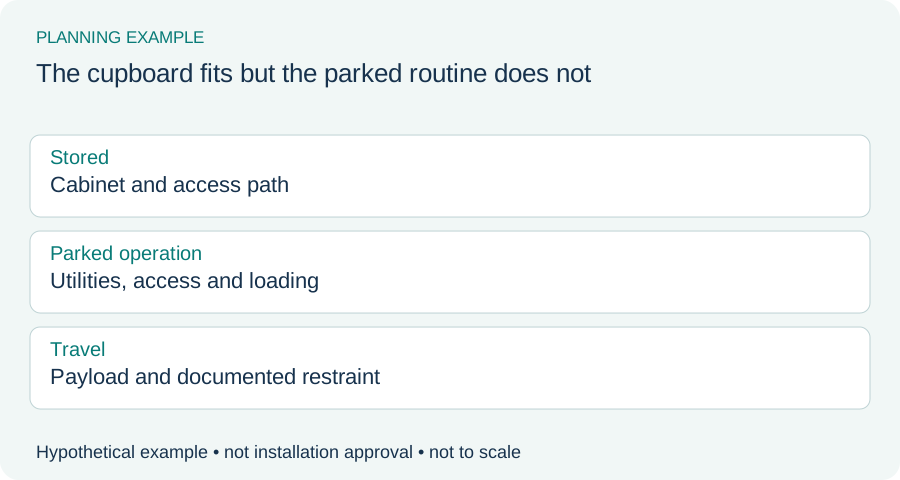
Example: the cupboard fits but the parked routine does not
A hypothetical camper has a cupboard large enough for a closed washer. Using it requires moving it into the aisle, where the proposed drain path would cross access to the door. The storage measurement is valid, but that operating plan is not resolved. Do not infer water use, wastewater capacity or transport restraint from the cabinet dimensions. Keep the appliance off the purchase list until the camper and appliance requirements agree.
| Check | Record | Watch for |
|---|---|---|
| Parked | Level location, access and operating envelope | Travel cupboard used as operating approval |
| Utilities | Model water, drain and electrical requirements | Tank or power capacity guessed |
| Travel | Payload and documented securing method | A snug cupboard treated as crash restraint |
See the measurements
Real products to compare with your space
These examples make the size tradeoffs easier to see. Open a product page for the complete fit verdict, setup notes, and retailer options.
BLACK+DECKER BPWM09W
One person, very tight spaces, and small loads washed often
View fit detailsHamilton Beach HBPW160
A balanced capacity for one or two people without full-size hookups
View fit detailsCOMFEE' CLV16N2AMG
Apartment shoppers who value simple controls and wheels
View fit detailsDo this before placing the order.
- Measure the destination. Include the full usable width, depth, height, and every fixed obstruction.
- Measure the working position. Add door, lid, hose, ventilation, loading, and walking clearance.
- Measure the route. Check doors, halls, stairs, elevators, corners, and the storage opening.
- Verify the exact model. Compare the manufacturer documentation with the listing before buying.
What this guide cannot decide
This guide cannot approve an appliance for a specific RV electrical system, cargo rating, tank system, campsite, or wastewater rule.