
At-a-glance comparison
Compare six options by fit and setup
Start with exterior dimensions, operating clearance, access, and setup requirements. Then verify the exact model, current availability, and purchase terms at the retailer before ordering.
Affiliate disclosure: As an Amazon Associate, Small Space Buyer earns from qualifying purchases. This does not change the price you pay. Walmart links are included for comparison.
| Recommendation | Exterior size | Capacity | Setup | Retailer options |
|---|---|---|---|---|
| Lowest-profile optionMainstays Rolling Zippered BinSee fit details | 16 W × 26 D × 5.9 H in. | 10.6-gallon fabric bin | Zippered clear top and pull handles | |
| Best fold-away bagAmazon Basics Fabric 2-PackSee fit details | 20 W × 30.2 D × 5.7 H in. | Two foldable fabric containers | Folds flat when empty; avoid overfilling and allow room to pull each bag out. Dimensions describe one bag | |
| Best rigid binWhitmor Clear-Top Underbed BagSee fit details | 18 W × 30 D × 6 H in. | One soft-sided clothing bag | Zipper closure and pull handles | |
| Best rolling accessIRIS USA 50-Quart Buckle-UpSee fit details | 17.75 W × 32.5 D × 6.5 H in. | 50-quart rigid bin | No assembly; built-in handles | |
| Best for clothingSterilite 41-Quart Underbed BoxSee fit details | 18.75 W × 34.63 D × 6.63 H in. | 41-quart rigid bin | Snap-on lid; no assembly | |
| Best for bulky beddingGeneric 90-Liter Canvas BagSee fit details | 20 W × 40 D × 7 H in. | 90-liter soft-sided bag | Zipper closure; collapses when empty |
Decision gate
Can the container come out when it is full?
Low storage succeeds only when the filled height, lowest obstruction, handle access, pull-out path, bed-frame legs, and turning room work together. Measure the usable clearance, not just the advertised bin height.
Use these checks to narrow the list, then open the exact specification and retailer listing for the model you are considering.
 #1 · Lowest-profile option
Mainstays · Rolling Zippered Bin
Mainstays Rolling Under-Bed Zippered Storage Bin with Clear Top and Wheels
Best for: Frequent access beneath beds with less than six inches of clearance
- Exterior size
- 16 W × 26 D × 5.9 H in.
- Storage
- 10.6-gallon fabric bin
- Container
- Low-profile rolling container
- Access
- Zippered clear top and pull handles
#2 · Best fold-away bagAmazon Basics · Fabric 2-Pack
Amazon Basics Foldable Under-Bed Storage Bags with Clear Window and Handles, Gray, Two-Pack
Best for: Seasonal clothing and linens in bags that store flat when unused
- Exterior size
- 20 W × 30.2 D × 5.7 H in.
- Storage
- Two foldable fabric containers
- Container
- Clear-window zippered bags
- Access
- Folds flat when empty; avoid overfilling and allow room to pull each bag out. Dimensions describe one bag
#3 · Best rigid binWhitmor · Clear-Top Underbed Bag
Whitmor Under-Bed Storage Bag with Clear PVC Top, Zipper and Side Handles
Best for: Blankets or clothing when a flexible six-inch-high bag fits best
- Exterior size
- 18 W × 30 D × 6 H in.
- Storage
- One soft-sided clothing bag
- Container
- Clear-top foldable storage
- Access
- Zipper closure and pull handles
#4 · Best rolling accessIRIS USA · 50-Quart Buckle-Up
IRIS USA 50-Quart Clear Under-Bed Storage Box with Buckle-Up Latches
Best for: Dust-protected rigid storage when 6.5 inches of clearance is available
- Exterior size
- 17.75 W × 32.5 D × 6.5 H in.
- Storage
- 50-quart rigid bin
- Container
- Clear plastic latching container
- Access
- No assembly; built-in handles
#5 · Best for clothingSterilite · 41-Quart Underbed Box
Sterilite 41-Quart Clear Under-Bed Storage Box with Snap-On Lid
Best for: Rigid, transparent storage for shoes, clothes, or toys
- Exterior size
- 18.75 W × 34.63 D × 6.63 H in.
- Storage
- 41-quart rigid bin
- Container
- Clear stackable plastic box
- Access
- Snap-on lid; no assembly
#6 · Best for bulky beddingGeneric · 90-Liter Canvas Bag
90-Liter Under-Bed Canvas Storage Bag with Clear Window, Handles and Zipper
Best for: Bulky comforters and bedding when seven inches of clearance is available
- Exterior size
- 20 W × 40 D × 7 H in.
- Storage
- 90-liter soft-sided bag
- Container
- Large foldable bedding container
- Access
- Zipper closure; collapses when empty
Affiliate disclosure: As an Amazon Associate, Small Space Buyer earns from qualifying purchases. This does not change the price you pay. Walmart links are included for comparison and may become affiliate links after program approval.
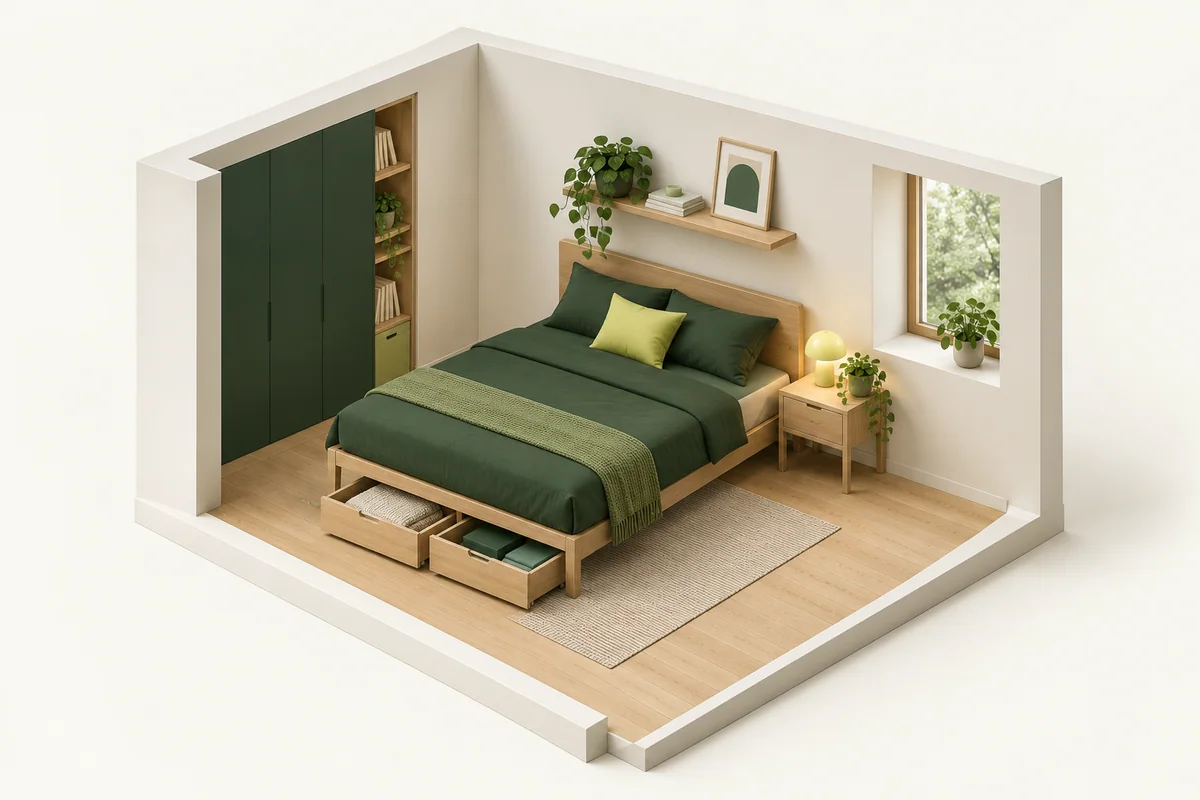
Check the space needed in use
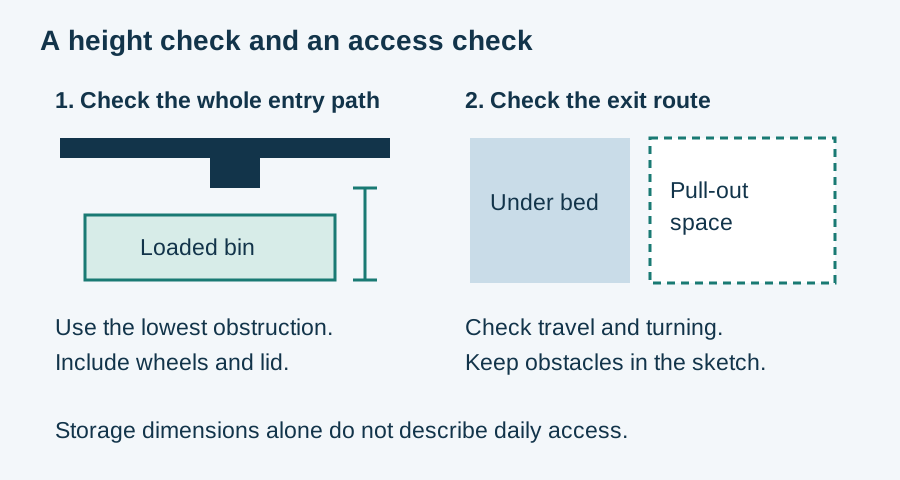
Use the lowest point along the complete entry path, not the gap at one easy-to-reach corner. Compare it with the loaded container including wheels and lid, then measure enough floor space to pull the container out and use it.
Fit guidance
How to choose for a genuinely small space
Use the lowest clearance
Beds can sag, floors can slope, and center supports often sit lower than side rails. Measure at the intended entry side and across the storage path, then compare the smallest number with the container's full exterior height.
Plan the pull-out path
A bin that fits underneath may still be trapped by a wall, nightstand, or dresser. Measure the container length and the open floor beside the bed. Wheels improve frequent access but add height and work best on compatible flooring.
Match the container to the contents
Rigid bins protect crushable items and slide predictably; fabric bags flex into shallow spaces and fold away; rolling frames suit frequent access. Check lid design, dust protection, handles, and the weight you can comfortably pull.
Plan the complete setup
Read the guides that answer the next question.
These guides cover exact size limits, measurements, connections, and operating clearances that product listings often leave unclear.
Exact-dimension shortlist
Under-Bed Storage 7 Inches High or Less
Compare low-profile under-bed storage no more than 7 inches high by length, width, wheels, rigidity, lids, and access.
See qualifying products Buying guideUnder-bed clearance and access
Measure rails, supports, floor variation, container handles, and pull-out room.
Read the guide Buying guideMeasure any small space
Check the opening, hidden obstacles, and complete operating area.
Read the guide Buying guideStorage without closets
Use the bed as one part of a complete apartment storage system.
Read the guideCommon questions
Best Under-Bed Storage for Small Spaces: FAQ
How do I measure under-bed clearance?
Measure from the floor to the lowest rail, slat, center support, bolt, or sagging point along the entire path the container will use.
Are wheels worth the extra height?
They can make frequent access easier, but the full wheel height must clear the bed and the floor must allow smooth rolling.
Is fabric or plastic better under a bed?
Fabric saves height and folds away; rigid plastic protects contents and keeps its shape. Choose based on clearance, dust or moisture concerns, and access frequency.
Use your measurements