
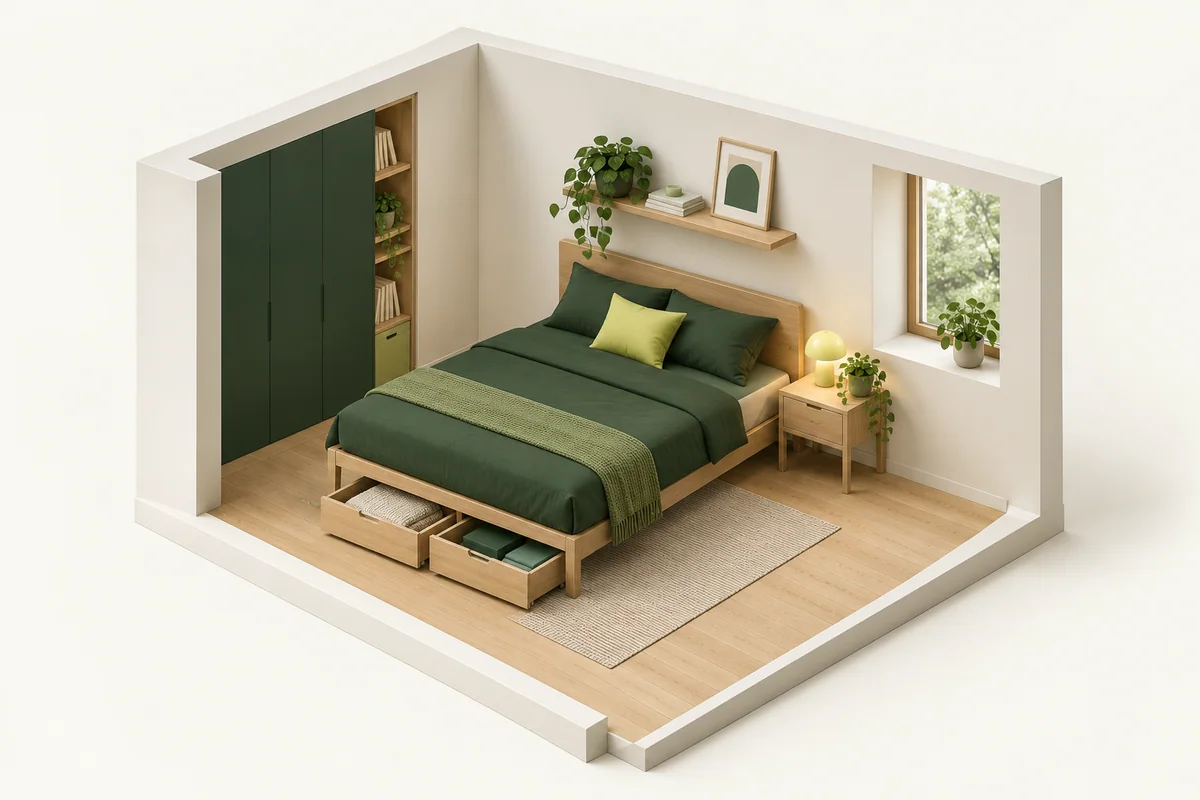
Under-bed height changes across the frame. Rails, bolts, slats, center supports, floor variation, and mattress load can all create a lower point than the easy measurement at one corner.
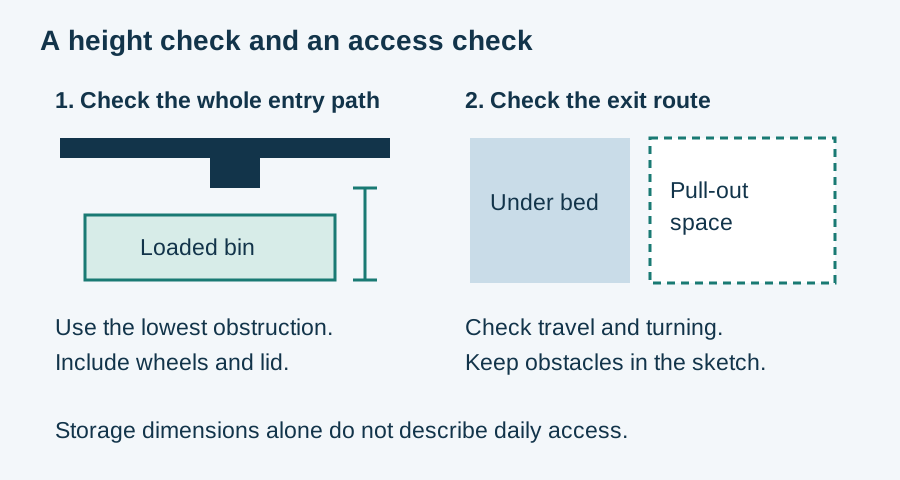
The quick answer: Use the lowest point along the complete entry path, not the gap at one easy-to-reach corner. Compare it with the loaded container including wheels and lid, then measure enough floor space to pull the container out and use it.
Plan these three things first.
Measure from the floor to the bottom of side rails, center beams, slats, brackets, bolts, and sagging upholstery.
02Use full container heightInclude lid rims, zipper seams, handles, wheels, and any bulge when the container is filled.
03Measure pull-out roomThe open floor beside the bed must be at least long enough for the container to exit and turn as needed.
Find the lowest point
Measure from the floor to the bottom of side rails, center beams, slats, brackets, bolts, and sagging upholstery. Check the intended entry side and the full path to the final position.
Use full container height
Include lid rims, zipper seams, handles, wheels, and any bulge when the container is filled. Leave a small practical margin so the bin does not scrape or snag every time it moves.
Measure pull-out room
The open floor beside the bed must be at least long enough for the container to exit and turn as needed. Nightstands, walls, doors, rugs, and nearby furniture can trap a bin that fits perfectly underneath.
Choose access frequency
Rolling rigid bins suit frequent use when flooring allows it. Fabric bags are lighter and can fit shallow gaps but may be harder to slide when heavily packed. Long divided containers can organize more but require more pull-out space.
Protect the items and the room
Match dust, moisture, pest, and crush protection to the contents. Avoid blocking floor vents or mechanisms, stay within bed-frame instructions, and lift safely rather than overloading one very large container.
Make the decision concrete
Example: a low bin that gets trapped under the bed
Hypothetical layout: the lowest rail is 7 inches above the floor and the filled bin is 6.5 inches high. That leaves half an inch on the height check, before accounting for floor variation or snagging. But if the container needs 30 inches of straight pull-out travel and a dresser leaves only 20 inches, the access check fails. Rotating the bin is an option only if the actual path permits it; measure or test with an empty cardboard outline first.
| Check | Record | Watch for |
|---|---|---|
| Lowest point | Rail, fastener and center-support clearance | Only one corner measured |
| Full height | Loaded bin, lid, wheels and handles | Unfilled fabric bag measured |
| Exit path | Straight travel and turning space | Nightstand or dresser traps the bin |
| Repeat use | Rugs, wheels, weight and lid access | A container that cannot be moved comfortably |
Try your measurements
Check one dimension at a time
Use the same direction for all three inputs: width, depth or height. Add all required extra space on that axis, including movement and manufacturer clearance. Repeat for the other axes and check obstructions separately.
Enter all three measurements. Leave required extra space blank if it is unknown; do not assume zero.
Available space − product body − required extra space = space remaining
See the measurements
Real products to compare with your space
These examples make the size tradeoffs easier to see. Open a product page for the complete fit verdict, setup notes, and retailer options.
Mainstays Rolling Zippered Bin
Frequent access beneath beds with less than six inches of clearance
View fit detailsAmazon Basics Fabric 2-Pack
Seasonal clothing and linens in bags that store flat when unused
View fit detailsWhitmor Clear-Top Underbed Bag
Blankets or clothing when a flexible six-inch-high bag fits best
View fit detailsDo this before placing the order.
- Measure the destination. Include the full usable width, depth, height, and every fixed obstruction.
- Measure the working position. Add door, lid, hose, ventilation, loading, and walking clearance.
- Measure the route. Check doors, halls, stairs, elevators, corners, and the storage opening.
- Verify the exact model. Compare the manufacturer documentation with the listing before buying.
What this guide cannot decide
This guide cannot verify a bed frame, floor, storage load, moisture condition, lifting method, or safe clearance for a specific home.