
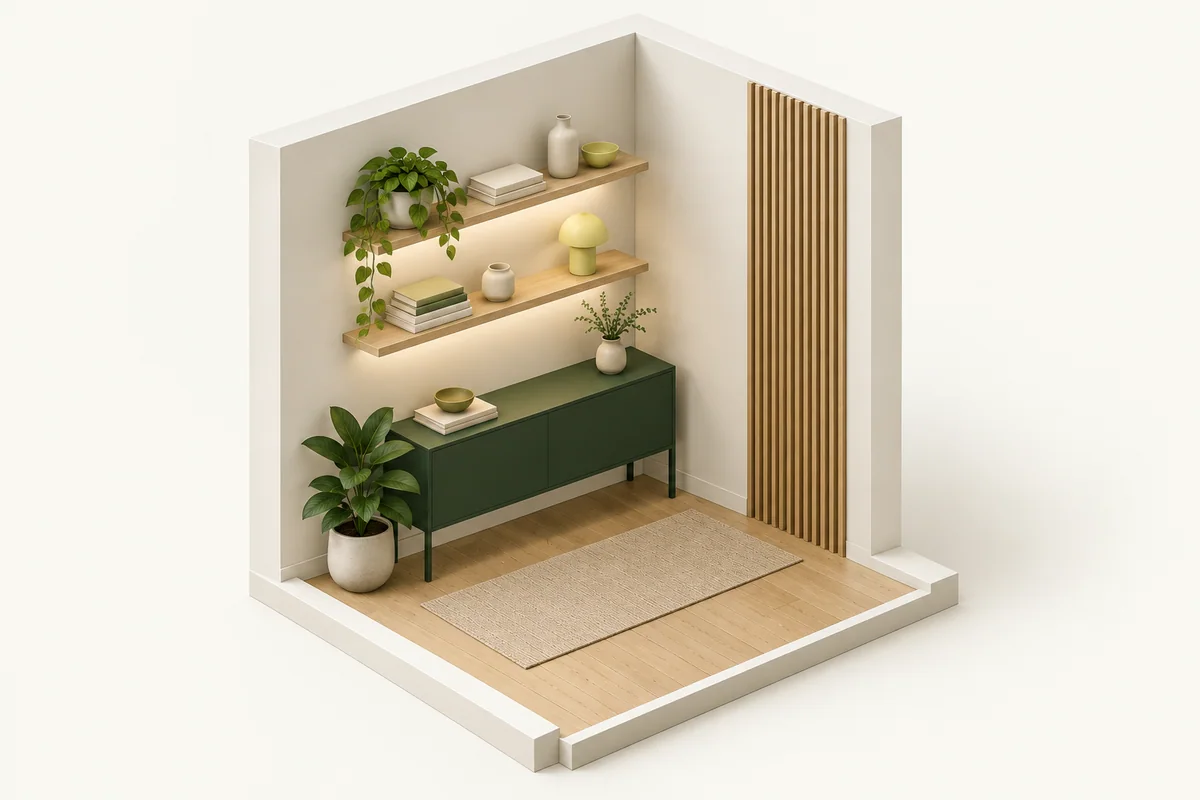
An apartment without enough closets needs a storage plan, not simply more containers. The goal is to assign belongings to measured zones while preserving daily access, walking room, ventilation, plumbing, and rental rules.
The quick answer: Assign storage by access frequency and the size of actual belongings. Hidden volume is useful only when containers can be removed without dismantling the room.
Plan these three things first.
Group clothing, shoes, linens, cleaning supplies, documents, hobby items, and seasonal goods.
02Use hidden floor area firstMeasure under beds, benches, sofas, and raised furniture at the lowest obstruction.
03Move selective storage upwardFloating shelves, corner towers, and tall narrow cabinets can save floor area, but they require safe mounting or restraint, reachable shelf heights, and a load plan.
Reduce and inventory before measuring
Group clothing, shoes, linens, cleaning supplies, documents, hobby items, and seasonal goods. Measure the largest objects and estimate how often each group is used. Storage capacity is only valuable when it matches real belongings.
Use hidden floor area first
Measure under beds, benches, sofas, and raised furniture at the lowest obstruction. Include container handles, lids, wheels, filled fabric shape, and the floor space needed to pull the item completely into the room.
Move selective storage upward
Floating shelves, corner towers, and tall narrow cabinets can save floor area, but they require safe mounting or restraint, reachable shelf heights, and a load plan. Check wall material and rental permission before buying hardware-dependent storage.
Protect the entry and utility zones
Shoe cabinets, rolling carts, and under-sink organizers belong in busy or constrained areas. Measure door swings, drawers, face frames, pipes, valves, baseboards, and the remaining walking width rather than using the closed footprint alone.
Create an access hierarchy
Keep daily items reachable with one motion, weekly items behind one door or drawer, and seasonal items in the deepest zones. Label hidden containers and avoid placing unrelated bins in front of one another, which turns capacity into friction.
Make the decision concrete
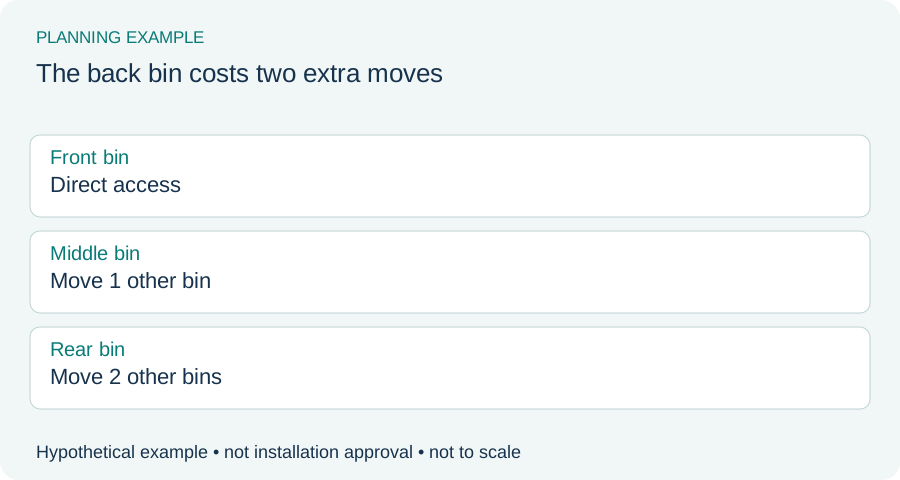
Example: the back bin costs two extra moves
Three hypothetical bins sit in one row, one behind another. Reaching the rear bin requires removing two bins first. Put seasonal belongings at the back and daily items in a direct-access position, or choose shallower containers. Count full pull-out movement as well as capacity; a larger bin can make daily storage less convenient.
| Check | Record | Watch for |
|---|---|---|
| Inventory | Largest item and frequency of use | Advertised volume substituted for belongings |
| Location | Under-bed, wall and floor access | Unused space assumed reachable |
| Routine | Number of moves to retrieve an item | Daily items parked behind seasonal bins |
See the measurements
Real products to compare with your space
These examples make the size tradeoffs easier to see. Open a product page for the complete fit verdict, setup notes, and retailer options.
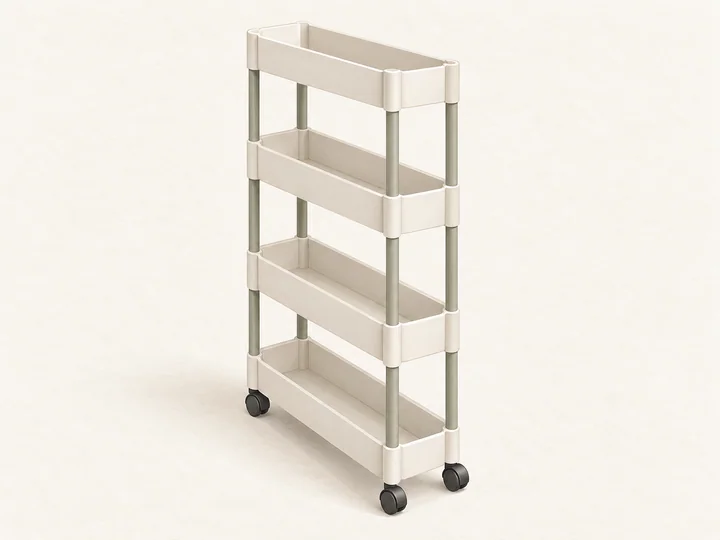
SPACEKEEPER B0D147F5FB
The narrowest gaps beside toilets, washers, refrigerators, or cabinets
View fit details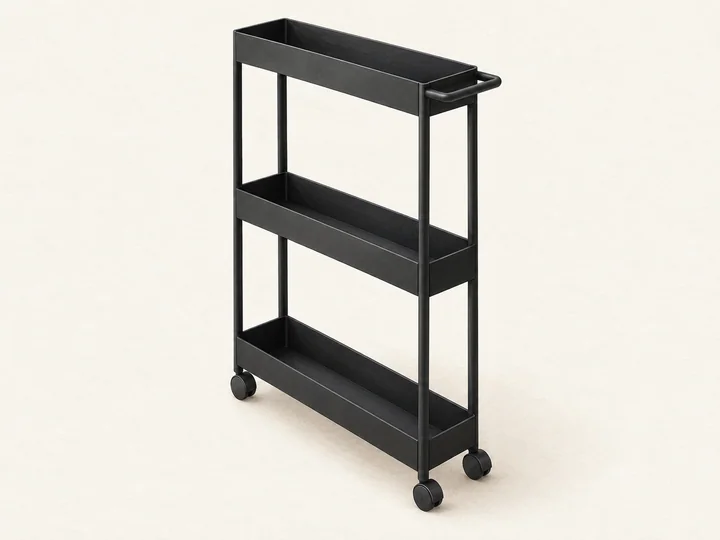
Yamazaki Home Tower Open
A very narrow gap where stronger steel construction and clean styling matter
View fit details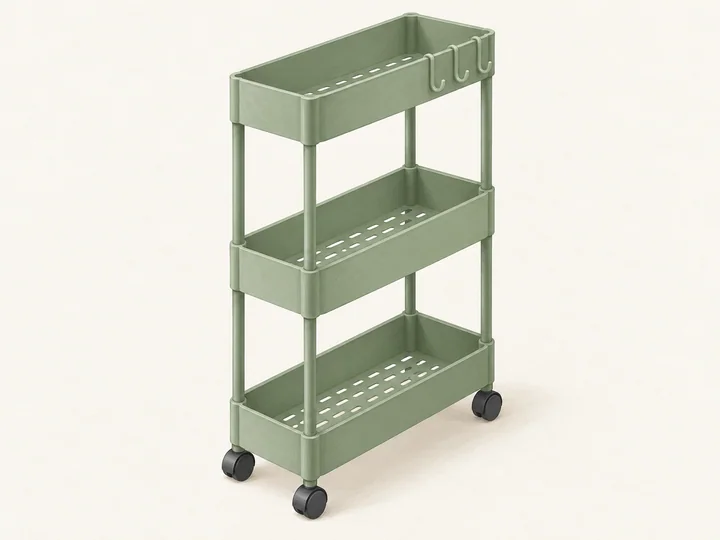
Mainstays 2591664370
Bathroom and laundry gaps that benefit from open baskets and side hooks
View fit detailsDo this before placing the order.
- Measure the destination. Include the full usable width, depth, height, and every fixed obstruction.
- Measure the working position. Add door, lid, hose, ventilation, loading, and walking clearance.
- Measure the route. Check doors, halls, stairs, elevators, corners, and the storage opening.
- Verify the exact model. Compare the manufacturer documentation with the listing before buying.
What this guide cannot decide
This guide cannot determine safe wall loading, permitted mounting, furniture stability, plumbing clearance, or the storage requirements of hazardous household products.