
At-a-glance comparison
Compare six options by fit and setup
Start with exterior dimensions, operating clearance, access, and setup requirements. Then verify the exact model, current availability, and purchase terms at the retailer before ordering.
Affiliate disclosure: As an Amazon Associate, Small Space Buyer earns from qualifying purchases. This does not change the price you pay. Walmart links are included for comparison.
| Recommendation | Exterior size | Capacity | Setup | Retailer options |
|---|---|---|---|---|
| Smallest footprintYouCopia StoraLid 24See fit details | 13.2 W × 10.8 D × 3.3 H in. | Up to 24 container lids | No tools; allow height for upright lids and room to lift them out | |
| Best for low cabinetsJoseph Joseph 85196See fit details | 13 W × 11 D × 8 H in. | Cans, jars, and pantry goods | Freestanding; no permanent installation | |
| Best corner usesimplehuman KT1184DCSee fit details | 15 W × 15.5 D × 7.5 H in. | Plates, cups, utensils, and glasses | Freestanding beside a compatible sink | |
| Balanced multi-tier pickOXO Fold FlatSee fit details | 16.4 W × 14.6 D × 9.5 H in. | Everyday plates, bowls, cups, and utensils | Freestanding; allow height for dishes and room for the removable utensil cup | |
| Best for appliancesJoseph Joseph 85194See fit details | 10 W × 8.5 D × 6.5 H in. | Spices, cans, bowls, and pantry goods | Freestanding adjustable shelf | |
| Most vertical storageYamazaki Home Tower 3257See fit details | 22.83 W × 6.3 D × 17.91 H in. | Condiments, spices, cookware, and utensils | Freestanding vertical rack; assembly required |
Decision gate
Will the organizer remain usable when loaded?
A countertop organizer can save space while making the counter harder to use. Check loaded height, cabinet clearance, outlet access, appliance airflow, hand reach, and the footprint left for prep.
Use these checks to narrow the list, then open the exact specification and retailer listing for the model you are considering.
 #1 · Smallest footprint
YouCopia · StoraLid 24
YouCopia StoraLid 24 Organizing Hero Lid Organizer, Speckled White
Best for: Keeping container lids upright in a shallow cabinet, drawer, or counter zone
- Exterior size
- 13.2 W × 10.8 D × 3.3 H in.
- Organizes
- Up to 24 container lids
- Space feature
- Five adjustable dividers
- Use
- No tools; allow height for upright lids and room to lift them out
#2 · Best for low cabinetsJoseph Joseph · 85196
Joseph Joseph CupboardStore Two-Tier Rotating Organizer, Gray
Best for: Reaching cans and jars at the back without sacrificing counter depth
- Exterior size
- 13 W × 11 D × 8 H in.
- Organizes
- Cans, jars, and pantry goods
- Space feature
- Two rotating tiers
- Use
- Freestanding; no permanent installation
#3 · Best corner usesimplehuman · KT1184DC
simplehuman KT1184DC Compact Steel Frame Dishrack with Swivel Drain Spout
Best for: A polished compact dish-drying station with controlled sink drainage
- Exterior size
- 15 W × 15.5 D × 7.5 H in.
- Organizes
- Plates, cups, utensils, and glasses
- Space feature
- Compact steel frame with direct drainage
- Use
- Freestanding beside a compatible sink
#4 · Balanced multi-tier pickOXO · Fold Flat
OXO Good Grips Aluminum Fold Flat Dish Rack with Removable Utensil Cup
Best for: Counters that need to become clear again after the dishes dry
- Exterior size
- 16.4 W × 14.6 D × 9.5 H in.
- Organizes
- Everyday plates, bowls, cups, and utensils
- Space feature
- Two-level rack folds flat
- Use
- Freestanding; allow height for dishes and room for the removable utensil cup
#5 · Best for appliancesJoseph Joseph · 85194
Joseph Joseph CupboardStore Expandable Shelf, 10 to 16 Inches Wide
Best for: Adding a second level while adapting to changing cabinet or counter width
- Exterior size
- 10 W × 8.5 D × 6.5 H in.
- Organizes
- Spices, cans, bowls, and pantry goods
- Space feature
- Expands from 10 to 16 inches
- Use
- Freestanding adjustable shelf
#6 · Most vertical storageYamazaki Home · Tower 3257
Yamazaki Home Tower Countertop Three-Shelf Rack with Hooks and Cutlery Pocket
Best for: Turning a long, shallow counter strip into three levels of storage
- Exterior size
- 22.83 W × 6.3 D × 17.91 H in.
- Organizes
- Condiments, spices, cookware, and utensils
- Space feature
- Three height-adjustable shelves
- Use
- Freestanding vertical rack; assembly required
Affiliate disclosure: As an Amazon Associate, Small Space Buyer earns from qualifying purchases. This does not change the price you pay. Walmart links are included for comparison and may become affiliate links after program approval.
Check the space needed in use
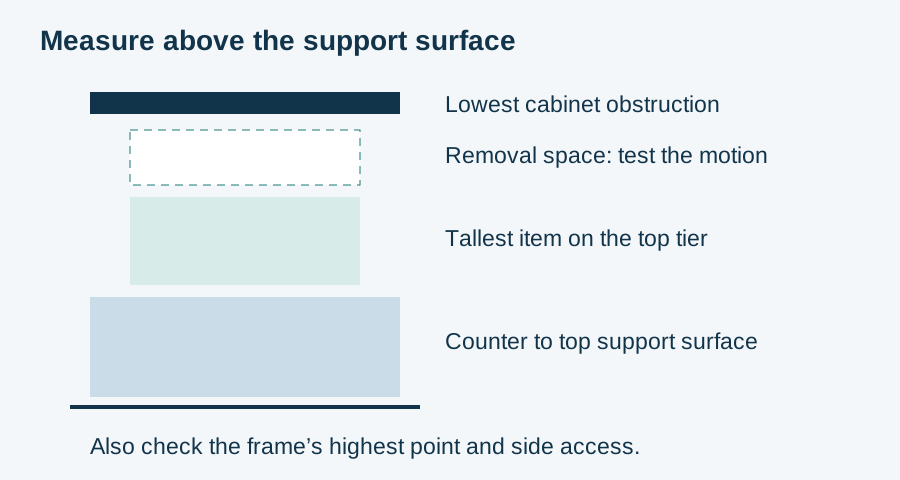
Measure from the counter to the lowest cabinet obstruction, then compare the loaded organizer height plus removal space. For an open top tier, use the height of its support surface plus the tallest item; do not automatically add an item’s full height to a frame that already surrounds it.
Fit guidance
How to choose for a genuinely small space
Measure upward as carefully as outward
Upper cabinets, light rails, outlets, and backsplash ledges can limit organizer height. Add the height of bottles or appliances placed on the top tier and enough room for your hand to lift them out.
Choose storage around frequency
Daily items belong where they can be removed without moving other objects. A compact turntable can improve corner access, while a tiered rack makes labels visible. Large appliance stands trade more footprint for usable space underneath.
Keep the counter functional
Mark the organizer footprint with tape and test the remaining prep area. Do not block appliance ventilation, sink access, hot surfaces, or the path for a cabinet door. An organizer that creates constant rearranging is not saving useful space.
Plan the complete setup
Read the guides that answer the next question.
These guides cover exact size limits, measurements, connections, and operating clearances that product listings often leave unclear.
Exact-dimension shortlist
Countertop Organizers 16 Inches Wide or Less
Compare countertop organizers 16 inches wide or less by depth, height, tier spacing, access, and remaining work surface.
See qualifying products Buying guideCountertop organizer clearance
Measure upper cabinets, outlets, stored items, and hand access.
Read the guide Buying guideCountertop clearance guide
Protect appliance airflow, heat clearance, and useful prep space.
Read the guide Buying guideTiny-kitchen counter organization
Assign preparation, landing, appliance, and storage zones.
Read the guideCommon questions
Best Countertop Organizers for Small Kitchens: FAQ
Are tiered organizers good under upper cabinets?
They can be, but measure the organizer plus the tallest stored item and the hand clearance needed to remove it from the top tier.
Should a small kitchen use a turntable or shelves?
Turntables improve access in corners; shelves use height and show more items at once. Choose based on the shape of the available counter and what you reach for daily.
Can an organizer sit over a countertop appliance?
Only when it does not violate that appliance's heat, ventilation, access, or manufacturer clearance requirements.
Use your measurements