
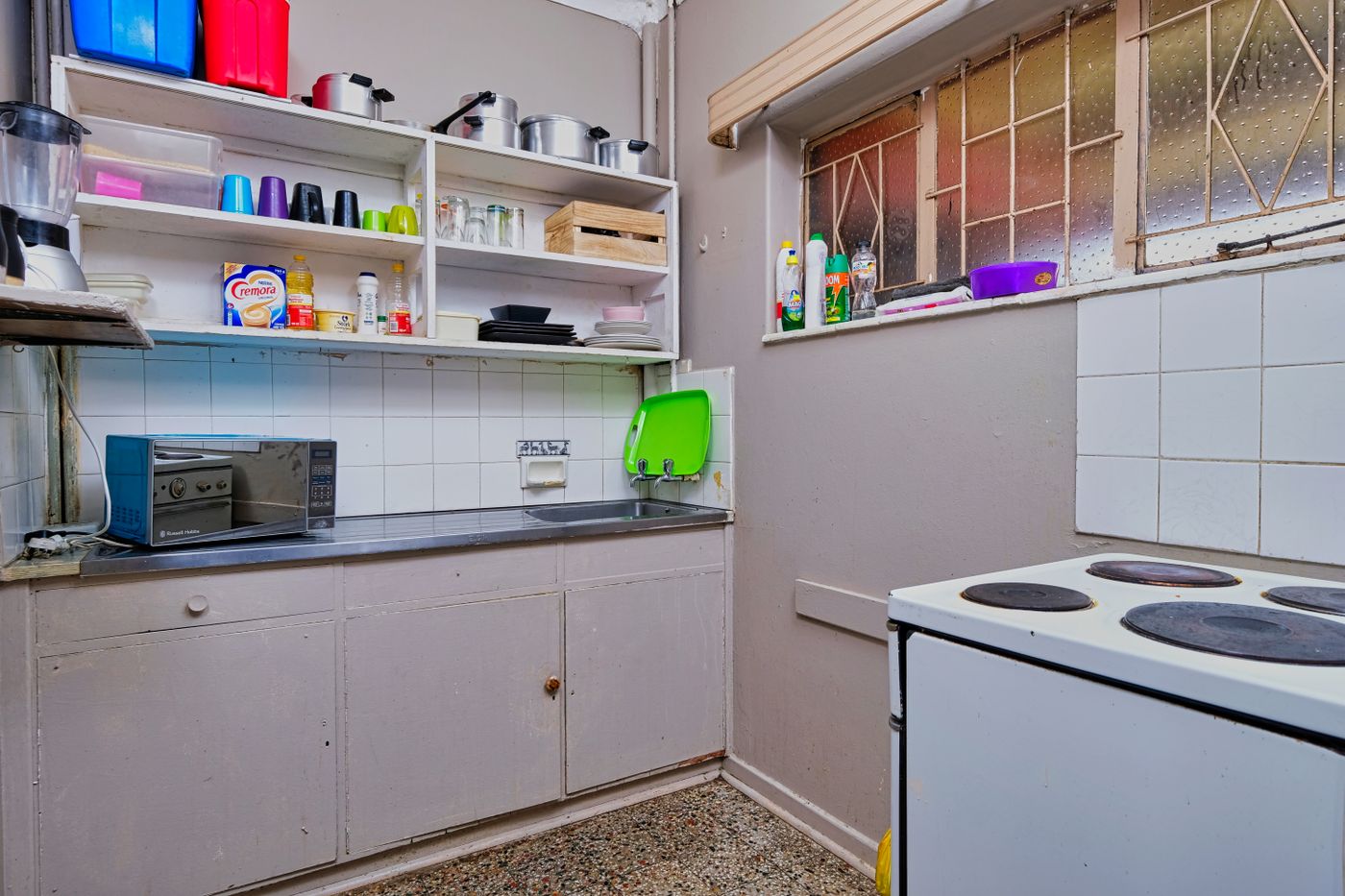
A tiny counter cannot support every appliance and container at once. A useful layout protects food preparation and hot-item landing space first, then assigns permanent and temporary positions to appliances and organizers.
The quick answer: Start with the cutting board and daily tasks, then give appliances and organizers the space they need in use. An empty-looking counter can still fail if removal paths overlap.
Plan these three things first.
Measure the counter, sink, backsplash, upper cabinets, trim, outlets, lights, switches, and nearby door swings.
02Reserve preparation and landing spaceChoose a minimum clear rectangle for a cutting board and another heat-safe area for dishes, baskets, or pans when needed.
03Measure appliances while operatingOpen microwave and dishwasher doors, pull air-fryer baskets, route hoses and plugs, and add model-specific ventilation.
Draw the fixed boundaries
Measure the counter, sink, backsplash, upper cabinets, trim, outlets, lights, switches, and nearby door swings. Mark areas affected by water, burner heat, steam, or an appliance vent before placing storage.
Reserve preparation and landing space
Choose a minimum clear rectangle for a cutting board and another heat-safe area for dishes, baskets, or pans when needed. Treat these zones as working equipment rather than leftover space that appliances may consume.
Measure appliances while operating
Open microwave and dishwasher doors, pull air-fryer baskets, route hoses and plugs, and add model-specific ventilation. A compact cabinet can create a much larger temporary footprint during cooking or cleanup.
Use organizers to reveal space
A shelf, turntable, or vertical rack should make frequently used items easier to reach without hiding outlets or blocking cabinet doors. Include the height of stored bottles, lids, mugs, or spices and the hand space needed to remove them.
Choose what earns permanent counter space
Keep an item out when it is used often enough to justify its full footprint. Store occasional appliances only when their weight, cooling time, cord management, and cabinet route make setup realistic.
Make the decision concrete
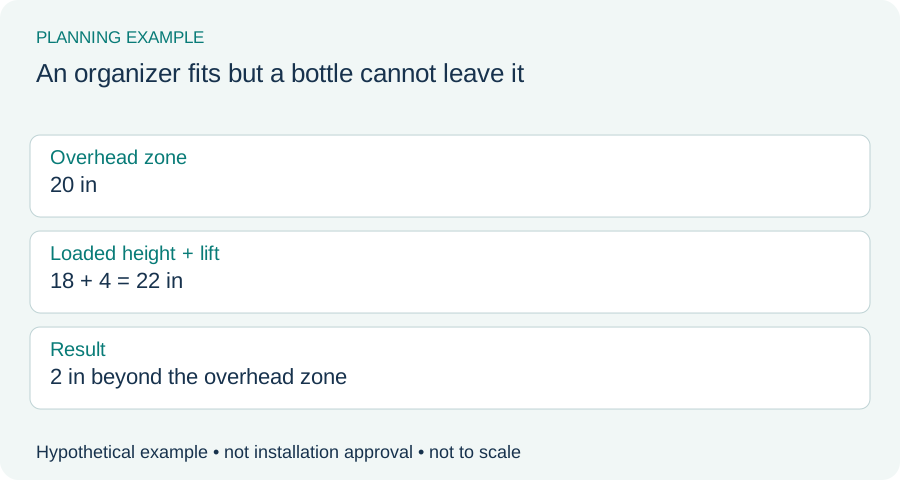
Example: an organizer fits but a bottle cannot leave it
Hypothetical cabinet underside: 20 inches above the counter. The loaded organizer reaches 18 inches and your tested bottle-removal motion needs another 4 inches. The 22-inch reach exceeds that overhead zone by 2 inches. Consider a different shelf arrangement or location, then recheck doors, outlets and appliance ventilation.
| Check | Record | Watch for |
|---|---|---|
| Preparation | Board, hands and common utensils together | Preparation left to whatever space remains |
| Loaded organizer | Tallest item and lift-out motion | Empty shelf height used |
| Nearby appliances | Operating gaps and movement | Storage placed into a ventilation zone |
Try your measurements
Check one dimension at a time
Use the same direction for all three inputs: width, depth or height. Add all required extra space on that axis, including movement and manufacturer clearance. Repeat for the other axes and check obstructions separately.
Enter all three measurements. Leave required extra space blank if it is unknown; do not assume zero.
Available space − product body − required extra space = space remaining
See the measurements
Real products to compare with your space
These examples make the size tradeoffs easier to see. Open a product page for the complete fit verdict, setup notes, and retailer options.
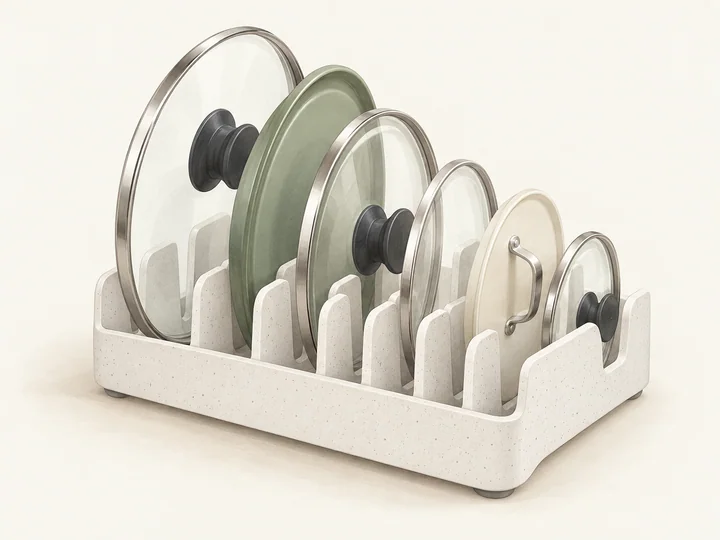
YouCopia StoraLid 24
Keeping container lids upright in a shallow cabinet, drawer, or counter zone
View fit details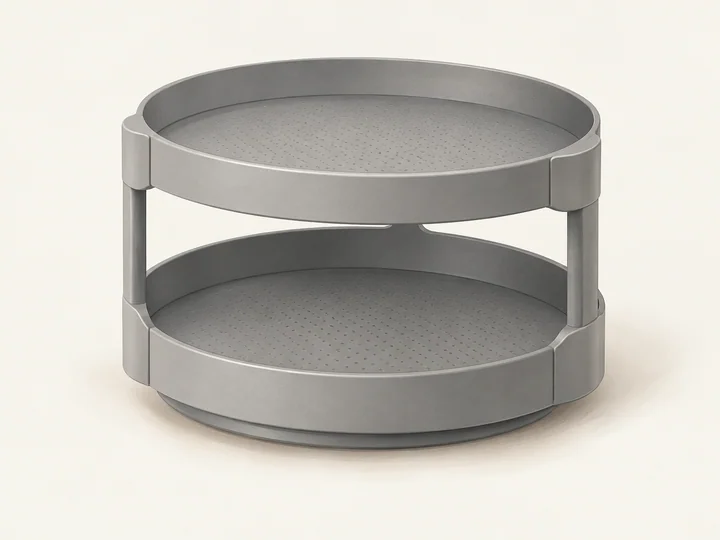
Joseph Joseph 85196
Reaching cans and jars at the back without sacrificing counter depth
View fit details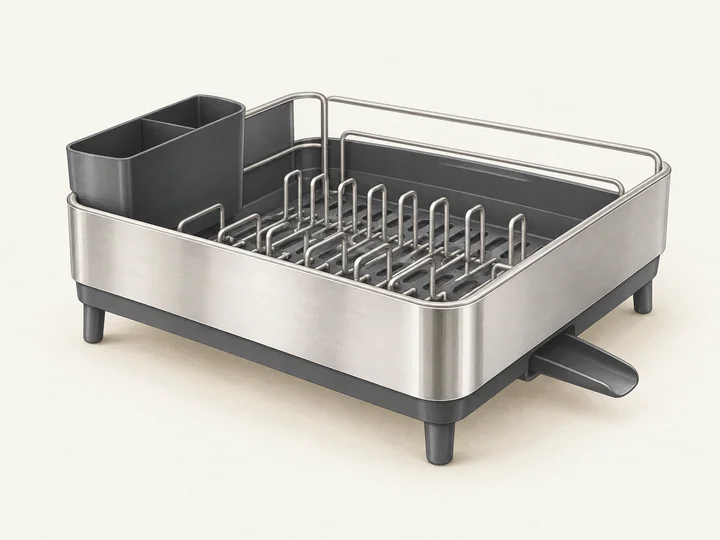
simplehuman KT1184DC
A polished compact dish-drying station with controlled sink drainage
View fit detailsDo this before placing the order.
- Measure the destination. Include the full usable width, depth, height, and every fixed obstruction.
- Measure the working position. Add door, lid, hose, ventilation, loading, and walking clearance.
- Measure the route. Check doors, halls, stairs, elevators, corners, and the storage opening.
- Verify the exact model. Compare the manufacturer documentation with the listing before buying.
What this guide cannot decide
This guide cannot approve food-safety practices, electrical loading, appliance ventilation, heat clearance, counter materials, or a specific kitchen installation.