
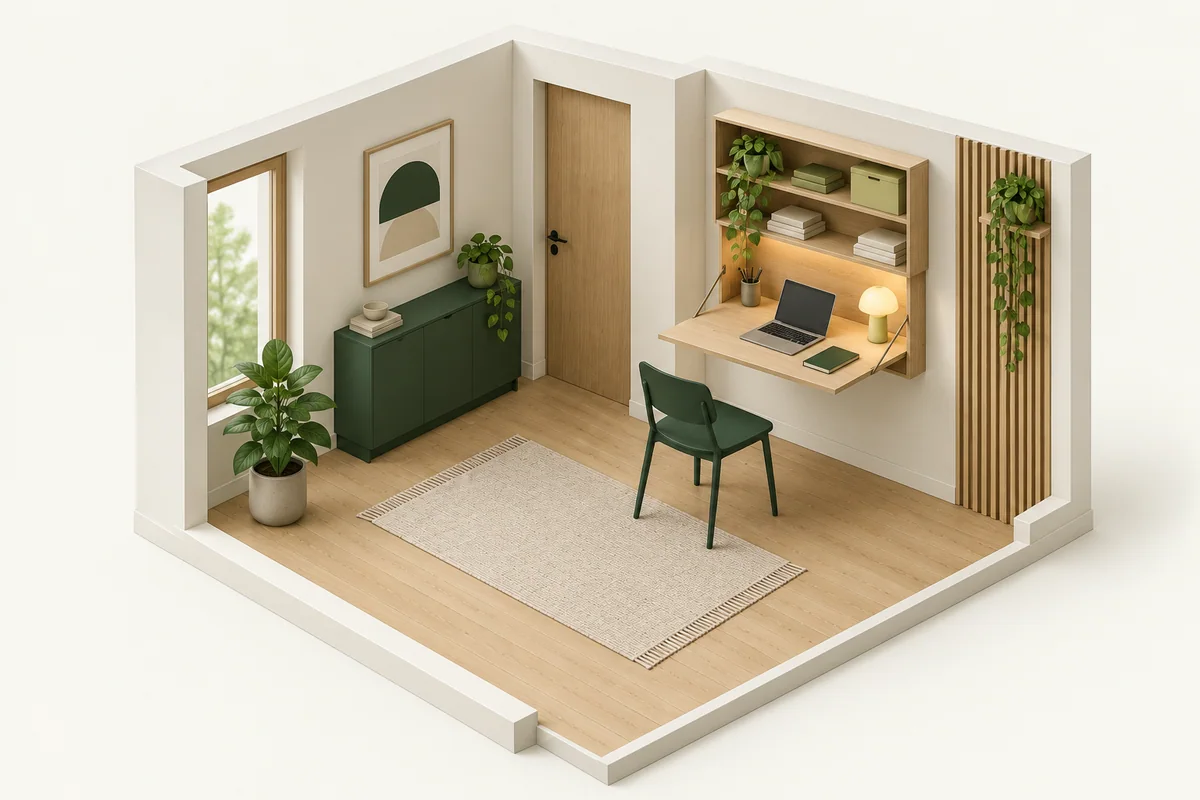
A bedroom office succeeds when work equipment fits without blocking the bed, closet, windows, or nighttime routine. Desk width is only the beginning; chair movement, screens, cables, lighting, and storage define the real work zone.
The quick answer: Lay out the desktop equipment, occupied chair and bedroom access together. A desk that fits the wall can still block the bed or dresser during work.
Plan these three things first.
Map access to the bed, closet, dresser, windows, vents, and door.
02Lay out the usable desktopArrange the laptop, monitor, keyboard, mouse, documents, and any equipment at the same time.
03Add the seated footprintMeasure knee width and height, chair width, armrests, recline, and pullback.
Protect the bedroom first
Map access to the bed, closet, dresser, windows, vents, and door. Keep the main walking route open in both work and sleep modes. Avoid placing equipment where it creates a nighttime trip hazard or blocks emergency access.
Lay out the usable desktop
Arrange the laptop, monitor, keyboard, mouse, documents, and any equipment at the same time. Compare that rectangle with the desk's usable surface after shelves, lips, monitor stands, and cable openings consume space.
Add the seated footprint
Measure knee width and height, chair width, armrests, recline, and pullback. Include the space needed to stand and leave the chair without hitting the bed or closing the room's path.
Plan power and cables
Choose a position near suitable outlets and route cables away from feet, wheels, bedding, heaters, and pinch points. Follow equipment and electrical guidance rather than creating an overloaded extension arrangement to reach a visually convenient wall.
Decide between fixed and folding
A fixed compact desk reduces daily setup. A folding desk can return floor area only when the equipment has another safe home and folding is quick enough to happen. Measure both operating and stored states.
Make the decision concrete
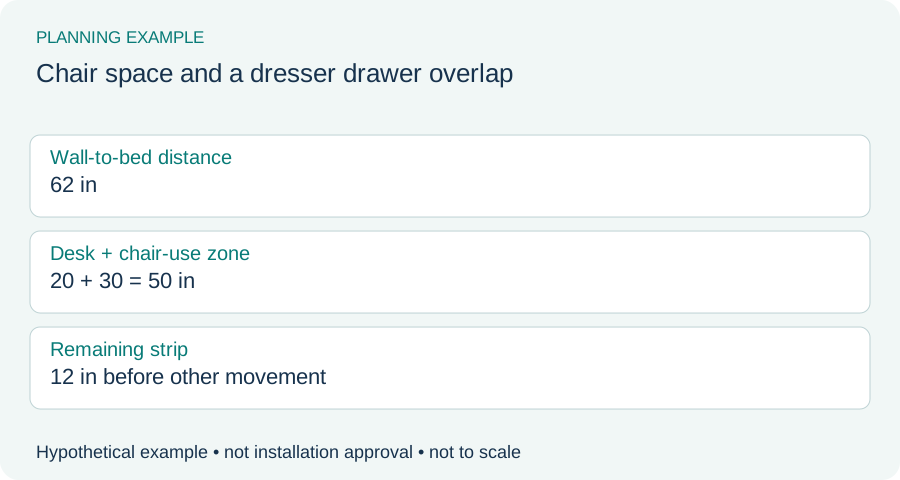
Example: chair space and a dresser drawer overlap
Hypothetical wall-to-bed distance: 62 inches. A 20-inch desk and your measured 30-inch chair-use zone leave 12 inches before other movement. A nearby drawer extending into that same area may make the arrangement unusable. Test sitting, standing, bed access and the drawer together rather than approving each on separate sketches.
| Check | Record | Watch for |
|---|---|---|
| Desktop | Keyboard, screen, mouse and usable surface | Nominal width ignores frame or shelving |
| Chair | Armrests, legs and stand-up movement | Tucked-in chair measured |
| Bedroom | Bed, closet and dresser access in work mode | Same free space assigned to two moving parts |
Try your measurements
Check one dimension at a time
Use the same direction for all three inputs: width, depth or height. Add all required extra space on that axis, including movement and manufacturer clearance. Repeat for the other axes and check obstructions separately.
Enter all three measurements. Leave required extra space blank if it is unknown; do not assume zero.
Available space − product body − required extra space = space remaining
See the measurements
Real products to compare with your space
These examples make the size tradeoffs easier to see. Open a product page for the complete fit verdict, setup notes, and retailer options.
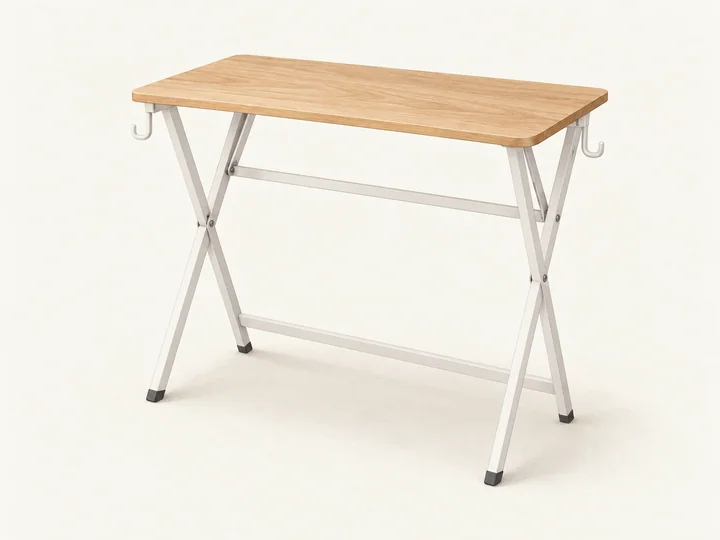
VEVOR 31.5 Folding Desk
A work surface that can fold nearly flat between uses
View fit details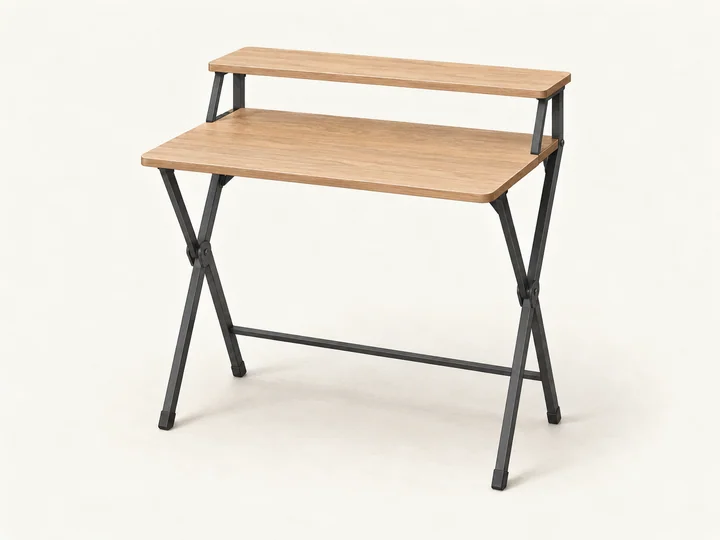
GreenForest 27.3 Folding Desk
Very narrow work areas that still benefit from a monitor or accessory shelf
View fit details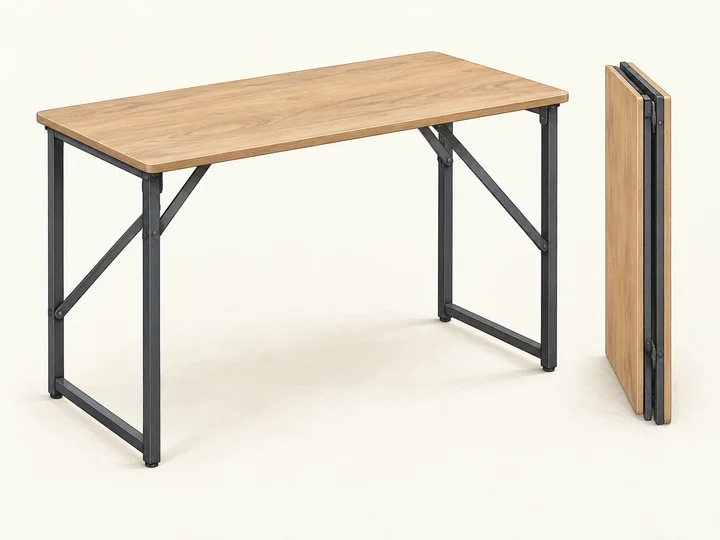
Coavas 39.4 Folding Desk
A larger laptop or monitor setup that still needs to fold away
View fit detailsDo this before placing the order.
- Measure the destination. Include the full usable width, depth, height, and every fixed obstruction.
- Measure the working position. Add door, lid, hose, ventilation, loading, and walking clearance.
- Measure the route. Check doors, halls, stairs, elevators, corners, and the storage opening.
- Verify the exact model. Compare the manufacturer documentation with the listing before buying.
What this guide cannot decide
This guide cannot assess ergonomics, electrical safety, furniture stability, accessibility, or emergency egress for a particular bedroom and user.