
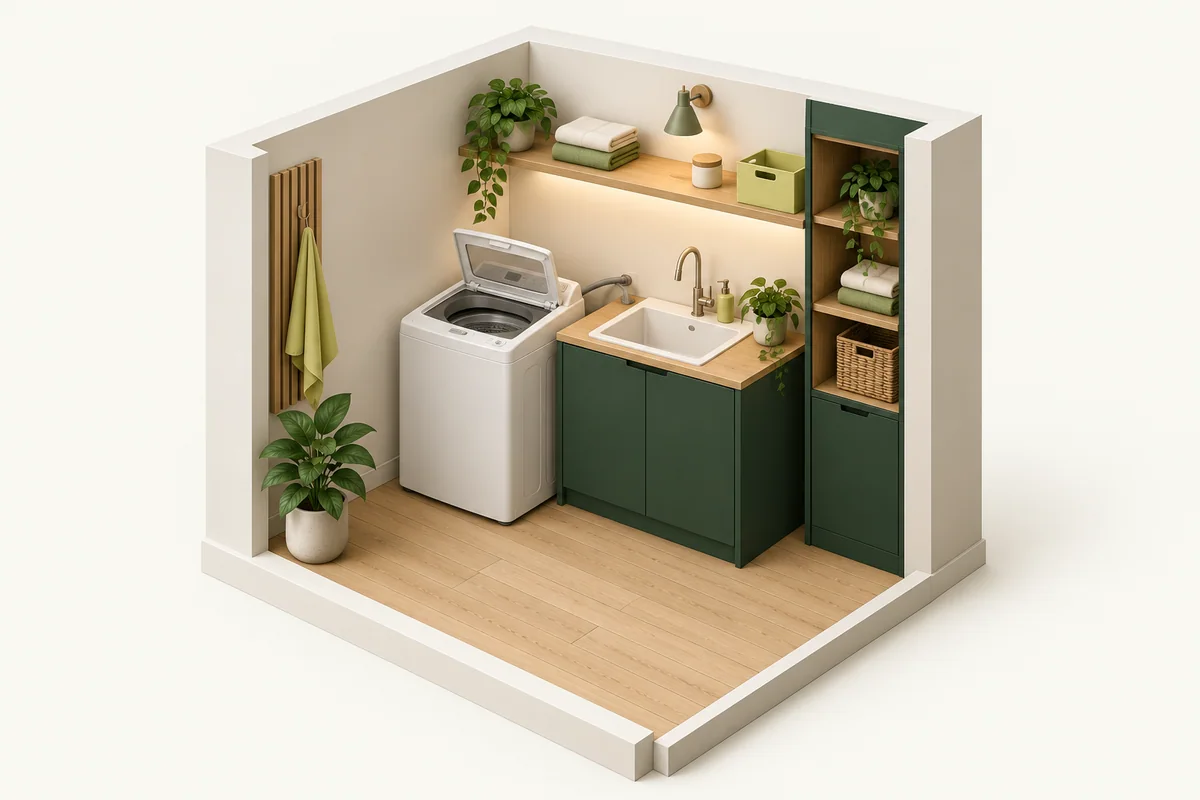
The best apartment washer is not automatically the smallest or the one with the most capacity. It is the model that fits the room, connects safely, drains securely, handles your normal loads, and complies with the rules where you live.
The quick answer: Eliminate unsupported installations first, then compare the remaining models by normal laundry needs and the effort of daily use. A ranking cannot override a failed fit check.
Plan these three things first.
Read the lease and appliance rules before comparing machines.
02Measure the working setupRecord width, depth, and height where the washer will operate, then add lid clearance, hose bends, faucet reach, drain placement, and room for loading.
03Choose capacity around normal laundryThink in recurring loads rather than a single advertised pound number.
Start with permission, not product pages
Read the lease and appliance rules before comparing machines. Some buildings restrict washers because of plumbing, electrical capacity, water damage, or insurance concerns. If the language is unclear, ask management in writing and describe the type of appliance, connection method, operating location, and supervision plan. Do not treat silence as approval.
Measure the working setup
Record width, depth, and height where the washer will operate, then add lid clearance, hose bends, faucet reach, drain placement, and room for loading. Measure the path from the entrance to the final location. A washer can fit a corner and still fail to clear a hallway turn or storage opening.
Choose capacity around normal laundry
Think in recurring loads rather than a single advertised pound number. List the clothing, towels, and sheets normally washed together. Small machines reward frequent loads; larger portable machines reduce cycles but require more space and are harder to move. Bulky comforters may still belong at a laundromat even when everyday laundry moves home.
Compare the whole ownership routine
Factor in setup time, supervision, drying, storage, lint cleanup, and moving the machine. A model with wheels can still be awkward when it approaches full-size weight. A convenient weekly routine usually converts better into real savings than a technically capable appliance that is frustrating to connect and store.
Use a fit-first shortlist
Eliminate any machine that exceeds the verified space or requires an unsupported connection. Then compare capacity, controls, retailer feedback, warranty information, and seller reliability. Small Space Buyer follows this order so a shopper sees the strongest fit first and useful alternatives rather than a generic popularity list.
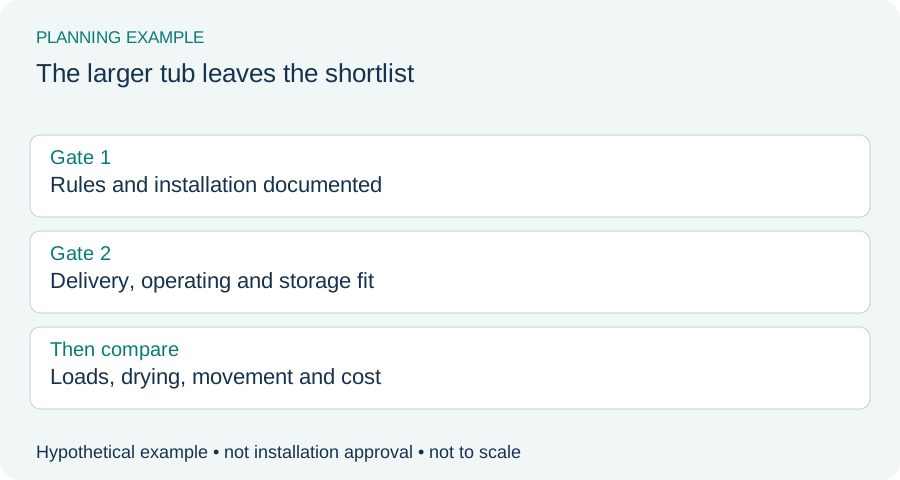
Make the decision concrete
Example: the larger tub leaves the shortlist
Hypothetical shortlist: one model has the preferred capacity but its connection is undocumented; another has documented connections but cannot pass the storage opening. Neither is ready to buy. Keep searching or change the proposed routine. Once basic requirements pass, compare workload, drying, movement and return terms rather than choosing a winner from headline capacity alone.
| Check | Record | Watch for |
|---|---|---|
| Eligibility | Rules and exact supply/drain requirements | Popularity treated as permission |
| Fit | Delivery, operating and storage checks | Only one room dimension compared |
| Ownership | Normal loads, drying, movement and upkeep | Largest tub assumed best for every household |
See the measurements
Real products to compare with your space
These examples make the size tradeoffs easier to see. Open a product page for the complete fit verdict, setup notes, and retailer options.
BLACK+DECKER BPWM09W
One person, very tight spaces, and small loads washed often
View fit detailsHamilton Beach HBPW160
A balanced capacity for one or two people without full-size hookups
View fit detailsCOMFEE' CLV16N2AMG
Apartment shoppers who value simple controls and wheels
View fit detailsDo this before placing the order.
- Measure the destination. Include the full usable width, depth, height, and every fixed obstruction.
- Measure the working position. Add door, lid, hose, ventilation, loading, and walking clearance.
- Measure the route. Check doors, halls, stairs, elevators, corners, and the storage opening.
- Verify the exact model. Compare the manufacturer documentation with the listing before buying.
What this guide cannot decide
No general buying guide can approve an appliance for a specific lease, faucet, outlet, floor, or drain. Verify each of those details directly.