
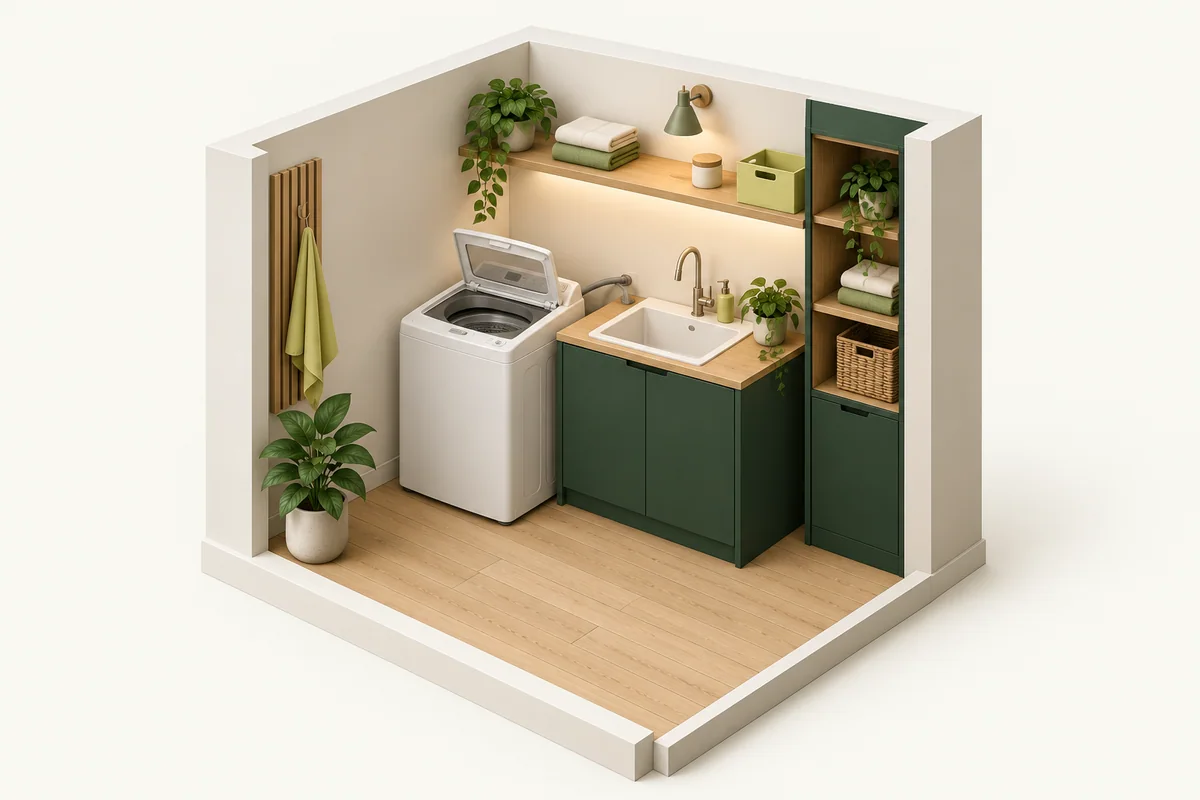
A portable washer can reduce trips, but the purchase price alone does not prove it will save money. The useful comparison is the total cost of your current routine against the complete cost of washing at home.
The quick answer: Compare equal amounts of laundry, including drying, supplies, travel and the setup purchase. Keep time and convenience separate from cash savings.
Plan these three things first.
Track four typical weeks of washer charges, dryer charges, detergent premiums, transportation, parking, and wash-and-fold fees.
02Calculate the home setupInclude the washer, tax, delivery, adapters, hoses, drying equipment, utilities, maintenance supplies, and any installation allowed by the building.
03Estimate a break-even pointSubtract the expected monthly home operating cost and remaining laundromat expense from the current monthly cost.
Calculate the current routine
Track four typical weeks of washer charges, dryer charges, detergent premiums, transportation, parking, and wash-and-fold fees. Record the number of trips and hours involved. A single unusual week is a poor baseline, while a month reveals how bedding, towels, and missed laundry days affect the total.
Calculate the home setup
Include the washer, tax, delivery, adapters, hoses, drying equipment, utilities, maintenance supplies, and any installation allowed by the building. If bulky items still require the laundromat, keep those trips in the estimate. Do not count an unapproved plumbing modification as a reasonable shortcut.
Estimate a break-even point
Subtract the expected monthly home operating cost and remaining laundromat expense from the current monthly cost. Divide the complete setup price by that monthly difference. The result is an estimate of how many months it may take to recover the purchase, assuming the machine lasts and the routine remains similar.
Put a value on convenience
A machine that saves little cash may still save transportation and waiting time. Conversely, a low-cost model can feel expensive if it requires many tiny loads, creates indoor drying problems, or is difficult to move. Keep financial savings and convenience separate so one does not disguise weaknesses in the other.
Stress-test the decision
Recalculate using a shorter appliance life, a repair, higher utility use, and fewer avoided laundromat trips. If the choice only works under perfect assumptions, it is financially fragile. If it remains useful under conservative assumptions and the building permits it, the purchase has a stronger case.
Make the decision concrete
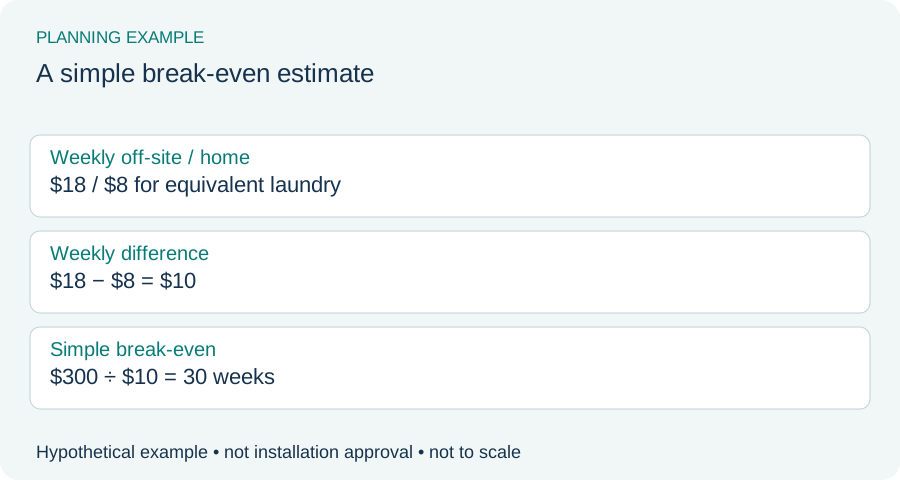
Example: a simple break-even estimate
Hypothetical costs for the same weekly laundry: off-site washing and drying cost $18 and home washing plus drying cost $8. The cash difference is $10 per week. A $300 setup would take 30 weeks to recover at that difference, before repairs, replacement or financing. If home drying was omitted from the $8, the comparison is incomplete. If ongoing home cost equals or exceeds off-site cost, this calculation has no positive cash break-even.
| Check | Record | Watch for |
|---|---|---|
| Comparable load | Same fabrics and weekly volume | Home loads assumed equal to large laundromat loads |
| Recurring cash | Water, electricity, supplies, drying and travel | Drying and extra trips omitted |
| Upfront cost | Appliance and required accessories | Purchase price alone treated as full cost |
See the measurements
Real products to compare with your space
These examples make the size tradeoffs easier to see. Open a product page for the complete fit verdict, setup notes, and retailer options.
BLACK+DECKER BPWM09W
One person, very tight spaces, and small loads washed often
View fit detailsHamilton Beach HBPW160
A balanced capacity for one or two people without full-size hookups
View fit detailsCOMFEE' CLV16N2AMG
Apartment shoppers who value simple controls and wheels
View fit detailsDo this before placing the order.
- Measure the destination. Include the full usable width, depth, height, and every fixed obstruction.
- Measure the working position. Add door, lid, hose, ventilation, loading, and walking clearance.
- Measure the route. Check doors, halls, stairs, elevators, corners, and the storage opening.
- Verify the exact model. Compare the manufacturer documentation with the listing before buying.
What this guide cannot decide
This comparison cannot predict future utility prices, repair costs, appliance life, or the exact operating cost of a specific household.