
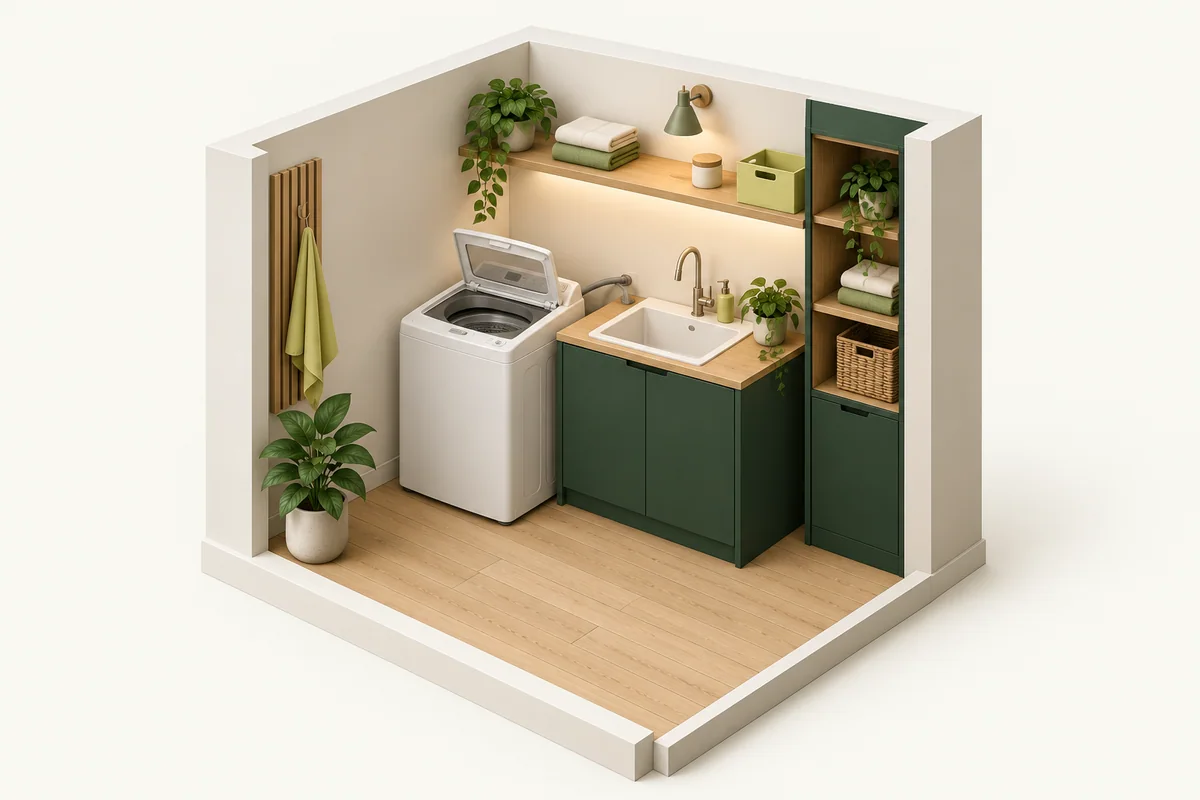
Drying is often the deciding half of a portable laundry setup. The right method depends on permitted exhaust, electrical supply, space, humidity, and how quickly clothing must be ready.
The quick answer: Choose the drying method alongside the washer. Exhaust, condensate management and hanging space are different constraints; spin extraction does not make clothes ready to wear.
Plan these three things first.
A vented dryer moves moist air through a permitted exhaust path.
02Ventless dryingVentless appliances manage moisture without an outdoor exhaust duct, but they still have model-specific drainage, clearance, electrical, heat, and cycle-time requirements.
03Spin extraction and racksA spin dryer or high-spin washer can reduce water before air drying.
Vented drying
A vented dryer moves moist air through a permitted exhaust path. It should never discharge into the room. Permanent vents and window kits must follow the appliance instructions, local requirements, and building rules.
Ventless drying
Ventless appliances manage moisture without an outdoor exhaust duct, but they still have model-specific drainage, clearance, electrical, heat, and cycle-time requirements. 'Ventless' does not mean installation-free.
Spin extraction and racks
A spin dryer or high-spin washer can reduce water before air drying. Racks use little infrastructure but need floor area, airflow, and time. Indoor humidity and the amount of laundry matter.
Match the method to the household
One person washing small loads may be comfortable with a rack and overnight drying. A family producing daily laundry may need more hanging area, faster extraction, or a documented ventless dryer. Consider towels, bedding, rainy weather, and back-to-back loads rather than judging the setup by a few lightweight shirts.
Budget for the complete system
The washer is only one cost. A realistic plan may also need a rack, hangers, drip protection, moisture monitoring, a dehumidifier, or a compatible dryer. Compare the full setup cost and the space it occupies against laundromat trips or a wash-and-fold service before deciding that the smallest appliance is automatically the cheapest solution.
Make the decision concrete
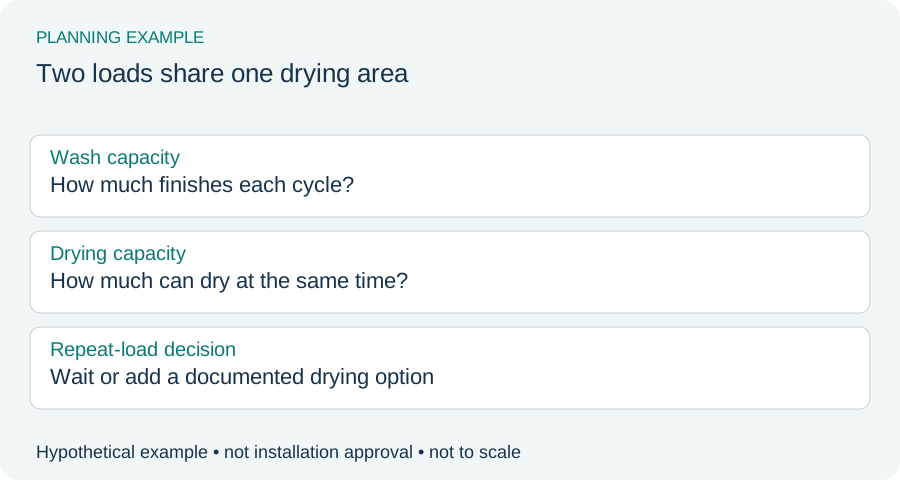
Example: two loads share one drying area
Hypothetical routine: one wash load fills your rack, and those items are still damp when the next load finishes. The bottleneck is drying space, even if the washer could run again. Record actual drying time for your fabrics and room before assuming you can double the daily laundry. A powered alternative needs its own documented installation; this example makes no energy or cycle-time comparison.
| Check | Record | Watch for |
|---|---|---|
| Vented option | Approved outdoor exhaust and model requirements | Indoor exhaust substituted for a vent |
| Ventless option | Condensate handling and installation instructions | Assuming no drainage or clearance |
| Rack option | Opened rack, hanging load and room conditions | Counting folded rack size as operating size |
See the measurements
Real products to compare with your space
These examples make the size tradeoffs easier to see. Open a product page for the complete fit verdict, setup notes, and retailer options.

BLACK+DECKER BPWM09W
One person, very tight spaces, and small loads washed often
View fit detailsHamilton Beach HBPW160
A balanced capacity for one or two people without full-size hookups
View fit detailsCOMFEE' CLV16N2AMG
Apartment shoppers who value simple controls and wheels
View fit detailsDo this before placing the order.
- Measure the destination. Include the full usable width, depth, height, and every fixed obstruction.
- Measure the working position. Add door, lid, hose, ventilation, loading, and walking clearance.
- Measure the route. Check doors, halls, stairs, elevators, corners, and the storage opening.
- Verify the exact model. Compare the manufacturer documentation with the listing before buying.
What this guide cannot decide
This comparison cannot predict cycle time, energy use, or room humidity for a specific product and home.