
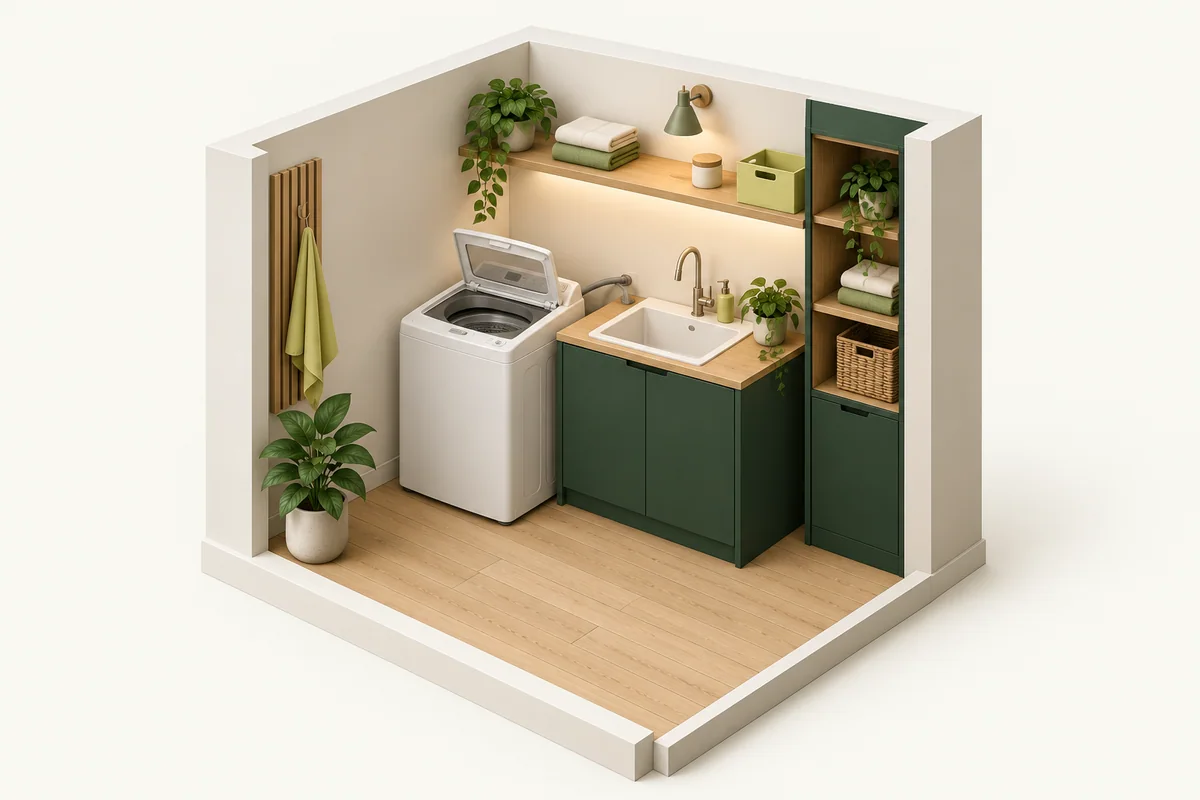
No permanent washer hookup does not always mean no at-home laundry. It does mean every part of the water path must be planned: filling, draining, hose security, cleanup, and storage.
The quick answer: Choose a documented water-supply method and drain route before comparing tub capacity. Manual filling is an option only when the exact machine permits it.
Plan these three things first.
Three workable water strategies
A faucet-connected washer is convenient when the faucet accepts a secure adapter. Manual filling can avoid thread compatibility only when the exact washer permits it; it also adds hands-on work and spill risk. A standard washer hookup offers the most conventional routine, but renters should not assume they can install or alter plumbing.
Drainage is the real constraint
Portable washers can discharge water quickly. A drain hose needs a secure route to a sink, tub, or documented collection method. Never leave a running drain unattended, and do not use a vessel whose capacity or stability is uncertain.
What to verify before ordering
Measure the storage path and operating space. Confirm the machine's exact inlet connection, supplied hose length, drain method, electrical requirement, and clearance in the manufacturer documentation. Check the lease and building rules.
Build the routine before buying
Walk through an imaginary load from start to finish. Where will the machine live, how will it reach the faucet, where will the drain hose be secured, and where will wet clothing go? Include the time needed to connect, supervise, disconnect, wipe surfaces, and store hoses. A compact washer is most useful when that routine is realistic enough to repeat every week.
When a portable washer is the wrong answer
Skip the purchase if the lease prohibits it, the faucet cannot accept an approved connection, the only drain route can slip or overflow, the outlet is unsuitable, or the machine cannot sit level. A laundry service or laundromat may be less convenient, but it is better than risking water damage, electrical problems, or a lease violation.
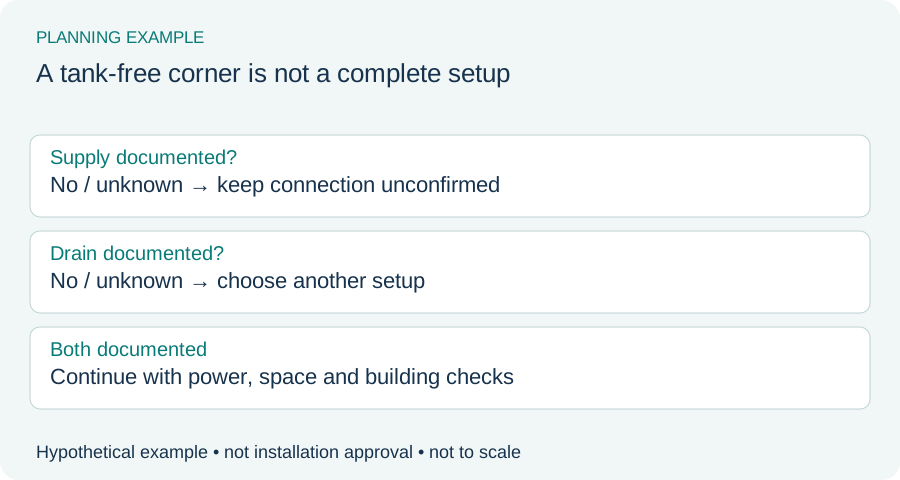
Make the decision concrete
Example: a tank-free corner is not a complete setup
A renter has room for a washer beside the kitchen but has a pull-down faucet with unknown adapter compatibility. The machine must remain off the shortlist until a permitted supply method is documented. Moving it to another sink may solve the supply question, but requires new drain, outlet, lid and delivery-path checks. A hose that physically reaches is not proof of a permitted connection.
| Check | Record | Watch for |
|---|---|---|
| Supply | Exact washer inlet and permitted filling method | Assuming every washer accepts poured-in water |
| Drain | Allowed outlet height, route and receiving fixture | Treating no hookup as no drainage |
| Routine | Setup, supervised cycle, shutdown and drying | Planning only where the closed machine sits |
See the measurements
Real products to compare with your space
These examples make the size tradeoffs easier to see. Open a product page for the complete fit verdict, setup notes, and retailer options.
BLACK+DECKER BPWM09W
One person, very tight spaces, and small loads washed often
View fit detailsHamilton Beach HBPW160
A balanced capacity for one or two people without full-size hookups
View fit detailsCOMFEE' CLV16N2AMG
Apartment shoppers who value simple controls and wheels
View fit detailsDo this before placing the order.
- Measure the destination. Include the full usable width, depth, height, and every fixed obstruction.
- Measure the working position. Add door, lid, hose, ventilation, loading, and walking clearance.
- Measure the route. Check doors, halls, stairs, elevators, corners, and the storage opening.
- Verify the exact model. Compare the manufacturer documentation with the listing before buying.
What this guide cannot decide
This guide cannot determine whether a particular faucet, outlet, floor, lease, or appliance is compatible without their exact documentation.