
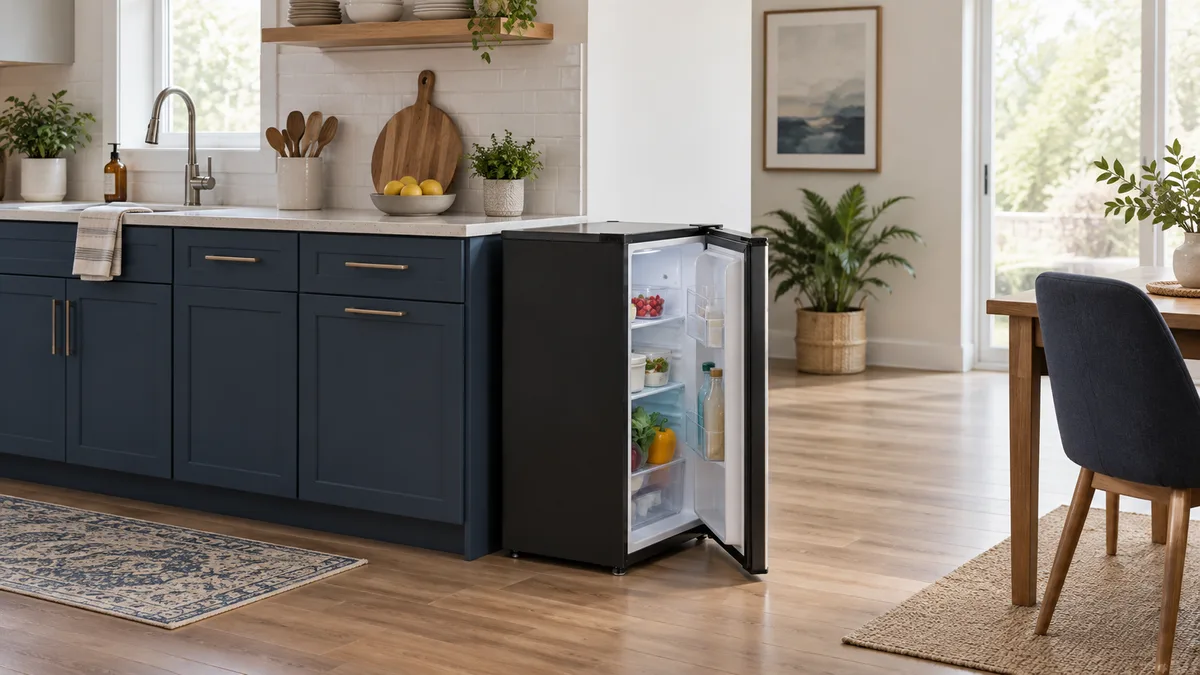
A compact refrigerator can fit inside the measured opening and still be unsafe or frustrating to use. The real footprint includes manufacturer-required ventilation, the power connection, and enough room to open the door and remove shelves.
The quick answer: Check the model’s installation type before measuring the opening. Add its required side, rear and top ventilation spaces to the cabinet dimensions, then test door movement and shelf removal separately. A cabinet-size match is not installation approval.
Plan these three things first.
There is no single universal gap that works for every mini fridge.
02Measure the door in its open positionCheck which side the door hinges from, whether it is reversible, and how far it must open for bins, shelves, or drawers to come out.
03Plan the plug and delivery pathMeasure the outlet position and plug depth without crushing the cord behind the refrigerator.
Use the model's clearance instructions
There is no single universal gap that works for every mini fridge. Read the exact manual for required space at the sides, rear, and top, then add those clearances to the listed exterior dimensions. Freestanding refrigerators should not be treated as built-in appliances unless the manufacturer specifically approves an enclosed installation.
Measure the door in its open position
Check which side the door hinges from, whether it is reversible, and how far it must open for bins, shelves, or drawers to come out. A door beside a wall may open enough to reach a drink but not enough to remove a crisper or clean the interior. Include any handle, hinge cap, and door edge that extends beyond the cabinet.
Plan the plug and delivery path
Measure the outlet position and plug depth without crushing the cord behind the refrigerator. Then check doors, stairs, elevators, hallway turns, counter edges, and the final opening. Use the packaged dimensions when available because protective material can make delivery wider than the bare appliance.
Account for heat and room conditions
A refrigerator moves heat from inside the cabinet into the surrounding room. Tight alcoves, direct sun, nearby cooking appliances, garages, and rooms outside the permitted ambient-temperature range can affect operation. Follow the manual's placement limits and keep ventilation openings clear rather than using the top or sides as packed storage.
Compare usable storage, not height alone
Very short models save vertical space but may sacrifice shelving, freezer room, or bottle storage. Taller compact refrigerators can hold more food while staying narrow. After eliminating models that fail the clearance and door tests, compare shelf layout, freezer configuration, defrost method, noise considerations, and the foods the household actually stores.
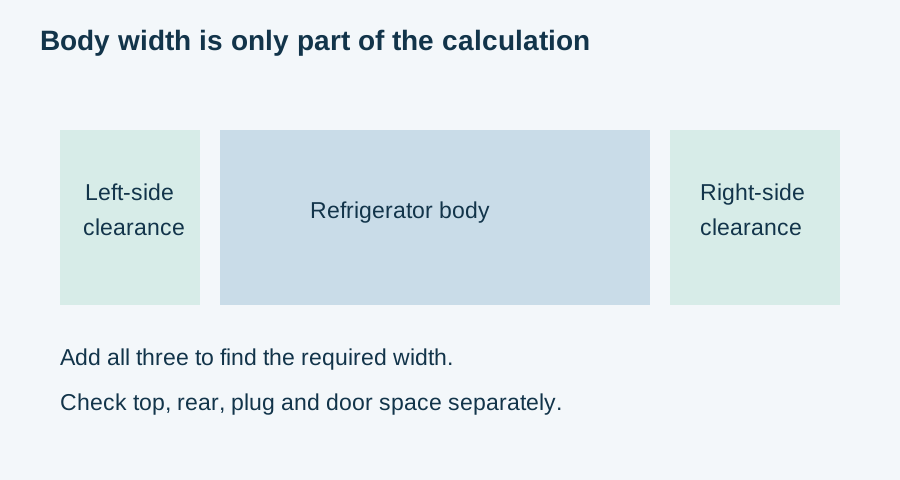
Make the decision concrete
Example: the body fits but the required setup does not
Hypothetical figures only: a refrigerator body is 19 inches wide and its instructions require 2 inches on each side. The total width needed would be 23 inches, so a 22-inch opening would fail that check. Do not apply the example’s 2-inch gaps to your refrigerator. Use the exact manual, and repeat for rear and top clearance. Even a passing width calculation does not make a freestanding model suitable for an enclosed cabinet.
| Check | Record | Watch for |
|---|---|---|
| Installation type | Model explicitly allows the intended location | Freestanding treated as built-in |
| Ventilation | Separate left, right, rear and top requirements | A generic gap replaces the manual |
| Door and drawers | Full opening and component-removal path | Door opens but shelf cannot come out |
| Power and delivery | Plug space and narrowest delivery point | Cord crushed or delivery route too narrow |
Try your measurements
Check one dimension at a time
Use the same direction for all three inputs: width, depth or height. Add all required extra space on that axis, including movement and manufacturer clearance. Repeat for the other axes and check obstructions separately.
Enter all three measurements. Leave required extra space blank if it is unknown; do not assume zero.
Available space − product body − required extra space = space remaining
Check the original instructions
Danby: freestanding versus built-in placementManufacturer explanation of installation differences. Specific clearance figures vary by model; obtain your exact owner’s manual. Reference checked September 7, 2026.
See the measurements
Real products to compare with your space
These examples make the size tradeoffs easier to see. Open a product page for the complete fit verdict, setup notes, and retailer options.
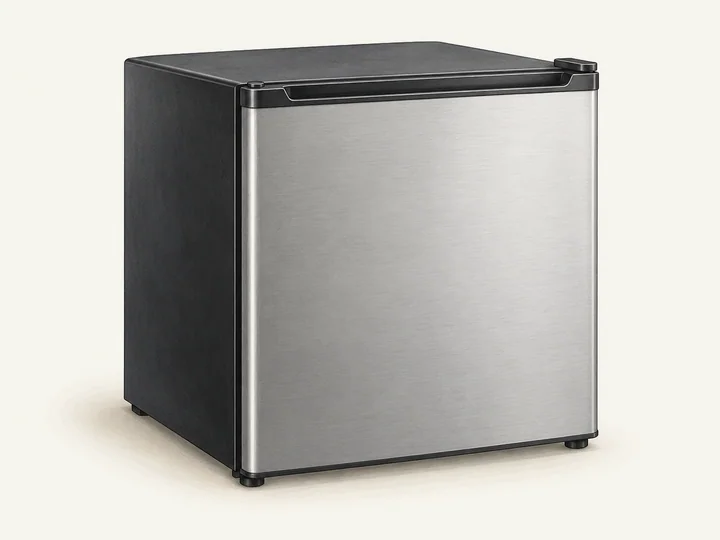
Midea WHS-65LB1
Drinks and snacks when vertical space is extremely limited
View fit details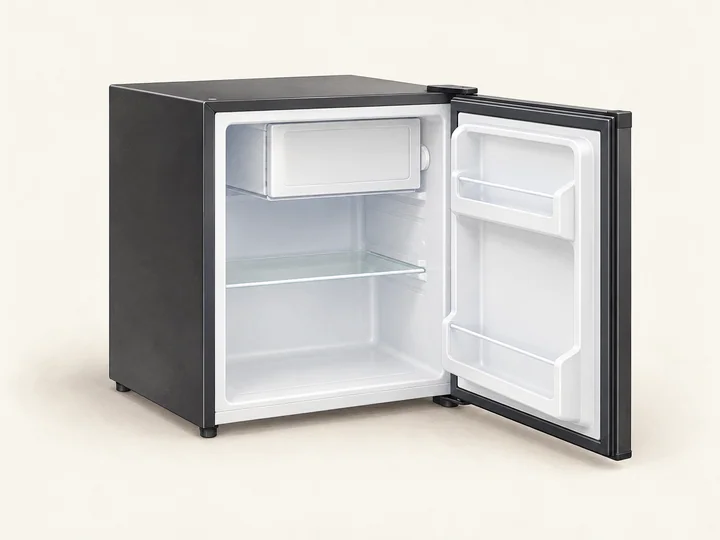
BLACK+DECKER BCRK17W
The narrowest refrigerator footprint in this department
View fit details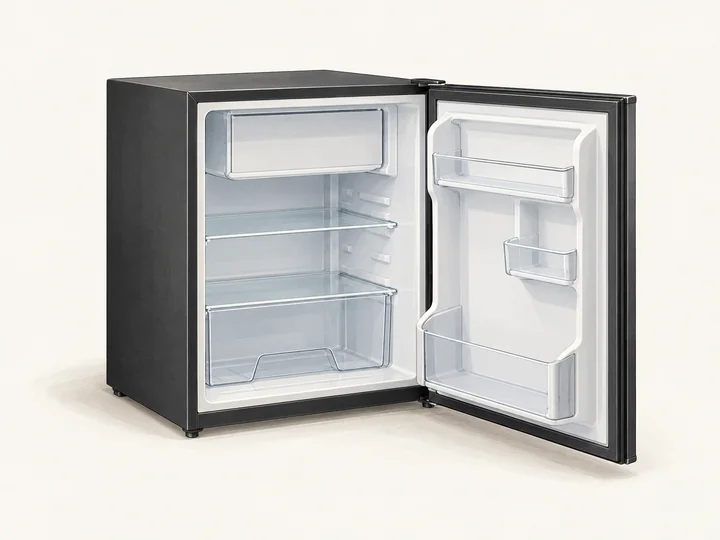
Midea WHS-87LB1
One-person daily food storage in a narrow footprint
View fit detailsDo this before placing the order.
- Measure the destination. Include the full usable width, depth, height, and every fixed obstruction.
- Measure the working position. Add door, lid, hose, ventilation, loading, and walking clearance.
- Measure the route. Check doors, halls, stairs, elevators, corners, and the storage opening.
- Verify the exact model. Compare the manufacturer documentation with the listing before buying.
What this guide cannot decide
This guide cannot approve an enclosed installation, electrical connection, ambient temperature, ventilation plan, or structural support for a specific refrigerator and room.