
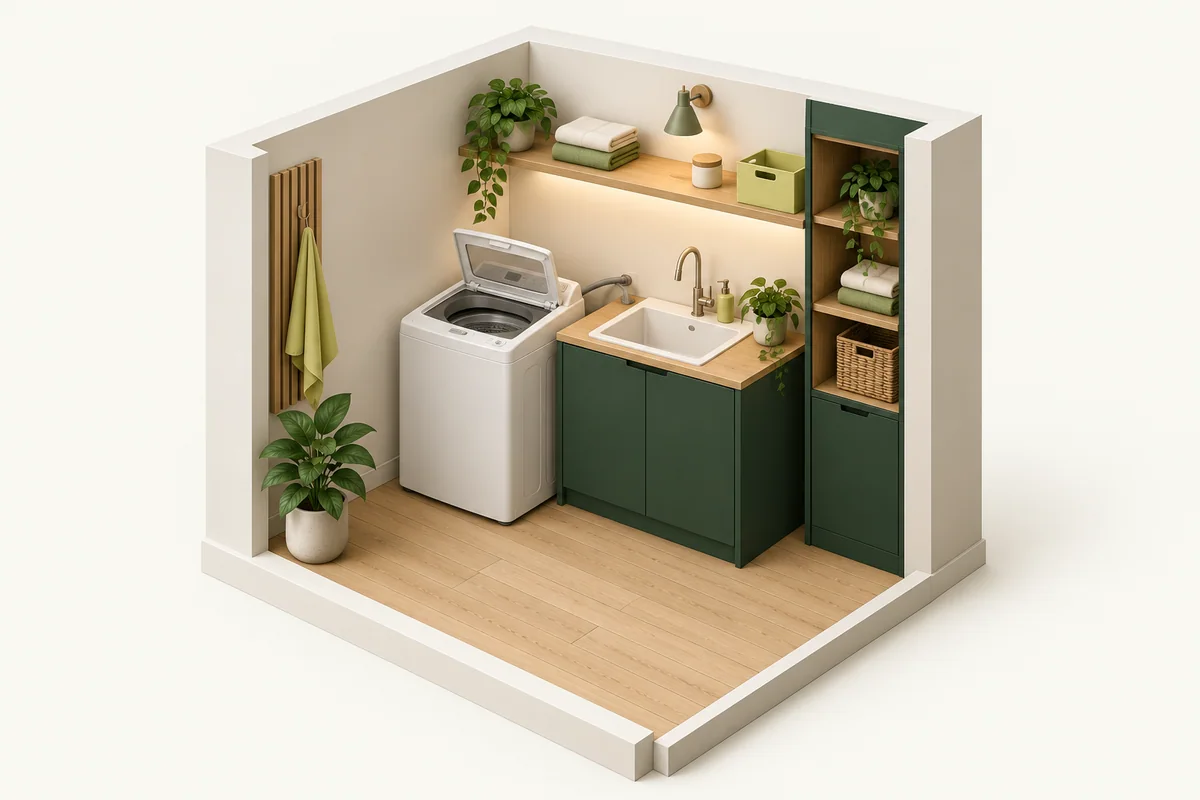
A portable appliance can still violate a lease. The safest approach is to identify the rule, describe the proposed setup accurately, and get any approval in writing before purchasing.
The quick answer: Ask about the exact appliance and proposed location before ordering. Save the written response and the rules it refers to; missing or unclear answers remain unresolved.
Plan these three things first.
Check the lease, appliance addenda, community rules, insurance requirements, and plumbing restrictions.
02Describe the exact proposalProvide the manufacturer and model, cabinet dimensions, electrical requirement, water connection, drain route, and planned operating location.
03Ask the right questionsRequest confirmation that the appliance type, faucet connection, drain method, outlet, and location are allowed.
Read every relevant document
Check the lease, appliance addenda, community rules, insurance requirements, and plumbing restrictions. Search for language about washing machines, additional appliances, water-filled furniture, alterations, hookups, drains, and unattended operation. Rules may apply even when the appliance does not need a permanent installation.
Describe the exact proposal
Provide the manufacturer and model, cabinet dimensions, electrical requirement, water connection, drain route, and planned operating location. Explain whether it will be disconnected after use and whether you will remain present during cycles. Avoid vague phrases such as mini washer when the actual machine is a large automatic unit.
Ask the right questions
Request confirmation that the appliance type, faucet connection, drain method, outlet, and location are allowed. Ask whether a licensed installer, drip pan, water alarm, insurance coverage, or inspection is required. If management approves only certain conditions, keep those conditions with the appliance documentation.
Keep the answer in writing
A hallway conversation can be forgotten or misunderstood. Use email or a signed document and save the complete exchange. If management changes, the written record helps show what was discussed. Written approval does not excuse unsafe use or a setup that differs from the description.
Know when to stop
Do not purchase when management refuses, the rules clearly prohibit the appliance, or approval depends on a modification you cannot legally perform. The potential savings from home laundry rarely justify eviction risk or liability for water damage.
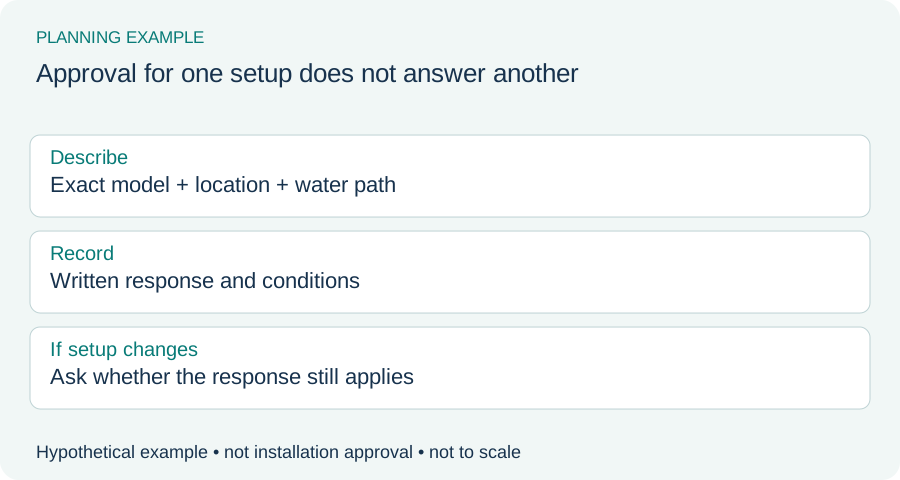
Make the decision concrete
Example: approval for one setup does not answer another
Management’s response describes a particular washer beside the kitchen sink. You later consider a different model in the bathroom. Send the revised model and location for clarification rather than assuming the first response covers every portable appliance. Include how water enters, where it drains, the operating position and how it will be stored. This is a documentation checklist, not a determination of lease rights.
| Check | Record | Watch for |
|---|---|---|
| Request | Model, location and connection description | A vague request about portable appliances |
| Response | Written answer and any conditions | Silence interpreted as agreement |
| Change | New model, location or connection method | An earlier answer reused for a different setup |
See the measurements
Real products to compare with your space
These examples make the size tradeoffs easier to see. Open a product page for the complete fit verdict, setup notes, and retailer options.
BLACK+DECKER BPWM09W
One person, very tight spaces, and small loads washed often
View fit detailsHamilton Beach HBPW160
A balanced capacity for one or two people without full-size hookups
View fit detailsCOMFEE' CLV16N2AMG
Apartment shoppers who value simple controls and wheels
View fit detailsDo this before placing the order.
- Measure the destination. Include the full usable width, depth, height, and every fixed obstruction.
- Measure the working position. Add door, lid, hose, ventilation, loading, and walking clearance.
- Measure the route. Check doors, halls, stairs, elevators, corners, and the storage opening.
- Verify the exact model. Compare the manufacturer documentation with the listing before buying.
What this guide cannot decide
This is general planning information, not legal advice or a determination of your rights under a particular lease or local law.