
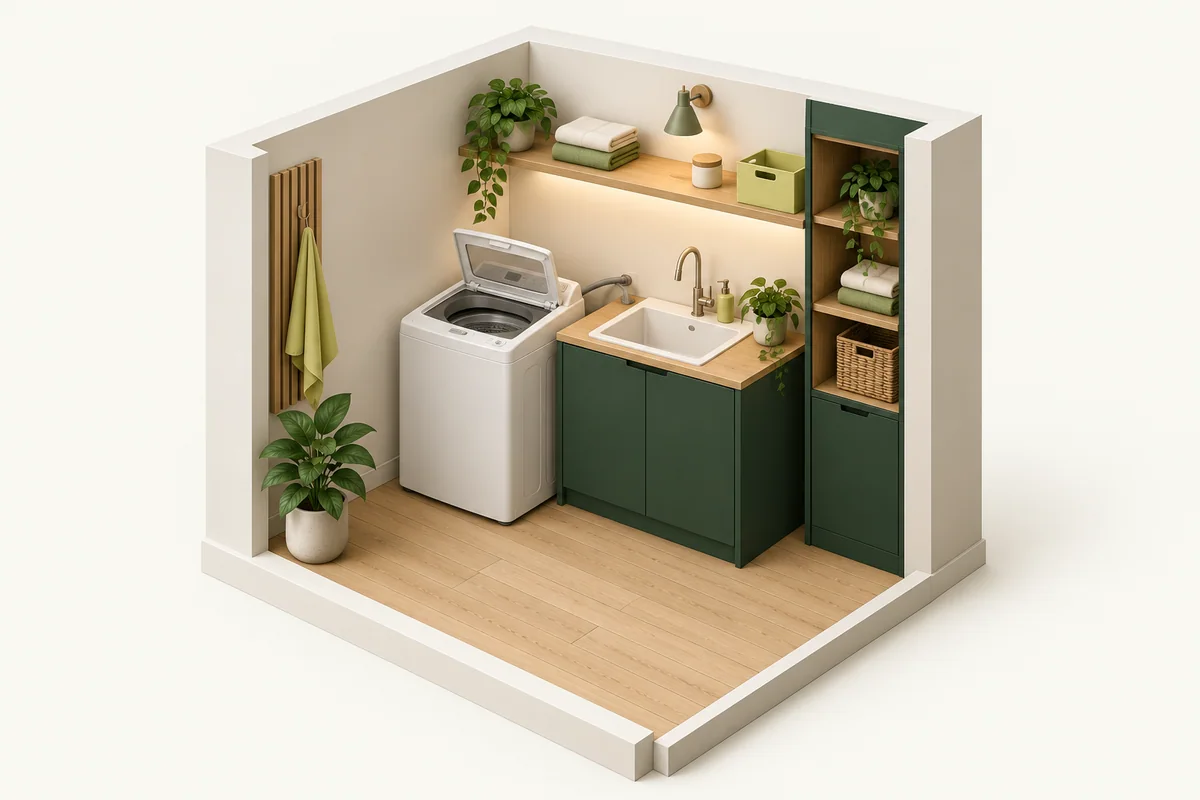
Portable does not mean risk-free. Water, electricity, heat, vibration, lint, and renter rules all meet in a small area, so the safest setup is the one you can supervise and maintain.
The quick answer: Use a before, during and after checklist for every load. Stop a cycle when a connection shifts or a leak appears; an alarm or tray does not make a faulty setup acceptable.
Plan these three things first.
Inspect hoses, fittings, the drain route, cord, plug, and floor area.
02During washing and dryingFollow the manual, stay nearby, and stop if you notice leaking, unusual movement, heat, smell, or sound.
03After the cycleShut off and disconnect water as directed, clean lint controls, empty any collection container, dry wet surfaces, and store hoses so residual water cannot damage the floor.
Before every load
Inspect hoses, fittings, the drain route, cord, plug, and floor area. Make sure the appliance is level and stable. Keep the water source and drain visible enough to catch a leak or slipping hose early.
During washing and drying
Follow the manual, stay nearby, and stop if you notice leaking, unusual movement, heat, smell, or sound. Do not defeat grounding, use an unspecified extension cord, overload a circuit, or vent moist air indoors.
After the cycle
Shut off and disconnect water as directed, clean lint controls, empty any collection container, dry wet surfaces, and store hoses so residual water cannot damage the floor.
Protect the room
Use the appliance only on a surface allowed by the manufacturer and keep the unit level. Water alarms or suitable containment can provide an early warning, but they do not make an unsafe connection acceptable. Know where the water shutoff is and keep the drain visible during early loads so a developing problem is easier to catch.
Protect the tenancy
Review the lease, building rules, and insurance implications before bringing in the appliance. Ask for written clarification when the rules are unclear. Photograph the setup and keep manuals and receipts. Documentation cannot override a prohibition, but it creates a better record of what was approved and how the equipment was installed.
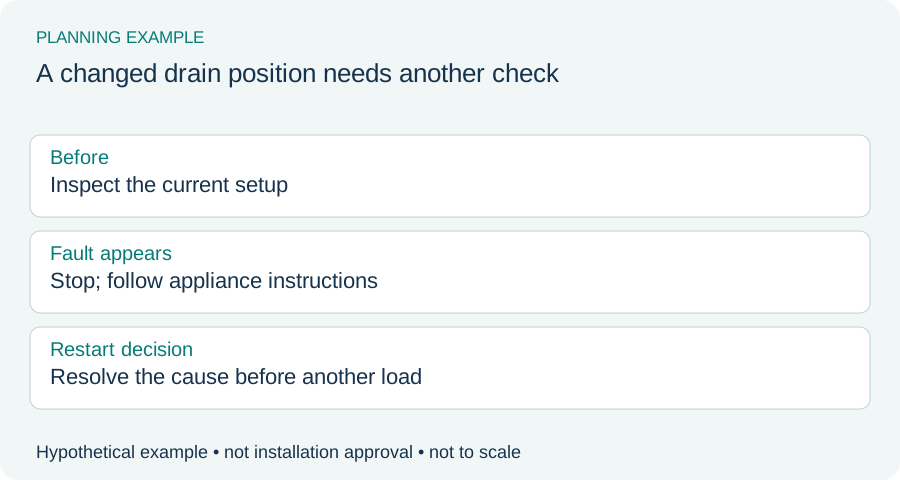
Make the decision concrete
Example: a changed drain position needs another check
You clean the sink and return the hose to what looks like the same position. The support is now loose. Treat this as a changed setup: stop and follow the manual to restore the permitted hose arrangement before another cycle. Keep the shutoff accessible and inspect for damage. A previous successful load is not evidence that the changed connection is ready.
| Check | Record | Watch for |
|---|---|---|
| Before | Hose condition, restraint, floor and power arrangement | Yesterday’s check reused after moving equipment |
| During | Drain position, leaks and unusual movement | Continuing after a fault appears |
| After | Manual-directed shutdown and cleanup | Storing wet hoses against vulnerable surfaces |
See the measurements
Real products to compare with your space
These examples make the size tradeoffs easier to see. Open a product page for the complete fit verdict, setup notes, and retailer options.
BLACK+DECKER BPWM09W
One person, very tight spaces, and small loads washed often
View fit detailsHamilton Beach HBPW160
A balanced capacity for one or two people without full-size hookups
View fit detailsCOMFEE' CLV16N2AMG
Apartment shoppers who value simple controls and wheels
View fit detailsDo this before placing the order.
- Measure the destination. Include the full usable width, depth, height, and every fixed obstruction.
- Measure the working position. Add door, lid, hose, ventilation, loading, and walking clearance.
- Measure the route. Check doors, halls, stairs, elevators, corners, and the storage opening.
- Verify the exact model. Compare the manufacturer documentation with the listing before buying.
What this guide cannot decide
This checklist is general education, not an electrical, plumbing, fire-code, lease, or product-specific inspection.