

Portable washers are repeatedly connected, drained, and moved. A short inspection and cleaning routine helps catch wear before it becomes a leak, odor, drainage problem, or failed load.
The quick answer: Use the exact manual for cleaning products, filter access and maintenance intervals. Record what you checked and any change in drainage or operation.
Plan these three things first.
The manual is the primary maintenance source.
02Inspect the water pathLook for cracked hoses, worn gaskets, loose adapters, corrosion, and fittings that no longer seat smoothly.
03Control residue and odorUse the correct detergent type and amount, remove lint as instructed, and allow the interior to dry when the manual recommends it.
Follow the model-specific schedule
The manual is the primary maintenance source. Identify instructions for inlet screens, lint filters, pump filters, tub-clean cycles, detergent quantity, hose replacement, and winterization. Save a digital copy of the manual and record the model and serial number before labels become difficult to read.
Inspect the water path
Look for cracked hoses, worn gaskets, loose adapters, corrosion, and fittings that no longer seat smoothly. Check the drain hose for flattening, residue, and damaged retainers. Replace components with manufacturer-approved parts rather than waiting for a small drip to become a larger failure.
Control residue and odor
Use the correct detergent type and amount, remove lint as instructed, and allow the interior to dry when the manual recommends it. Too much detergent can leave residue and affect rinsing. Address odors by following the documented cleaning process instead of mixing unapproved chemicals.
Watch balance and movement
Level the washer and distribute items according to the instructions. Repeated banging, walking, or severe vibration is not normal background noise to ignore. Stop the cycle, correct the load, and inspect the placement. Movement can strain hoses and damage both the machine and surrounding surfaces.
Store it ready for the next load
Drain residual water as directed, relieve pressure, wipe wet fittings, and route hoses so they do not kink. Store the washer where temperature and moisture remain within the manufacturer limits. A repeatable shutdown routine makes the next connection safer and reveals missing or damaged parts before laundry is already loaded.
Make the decision concrete
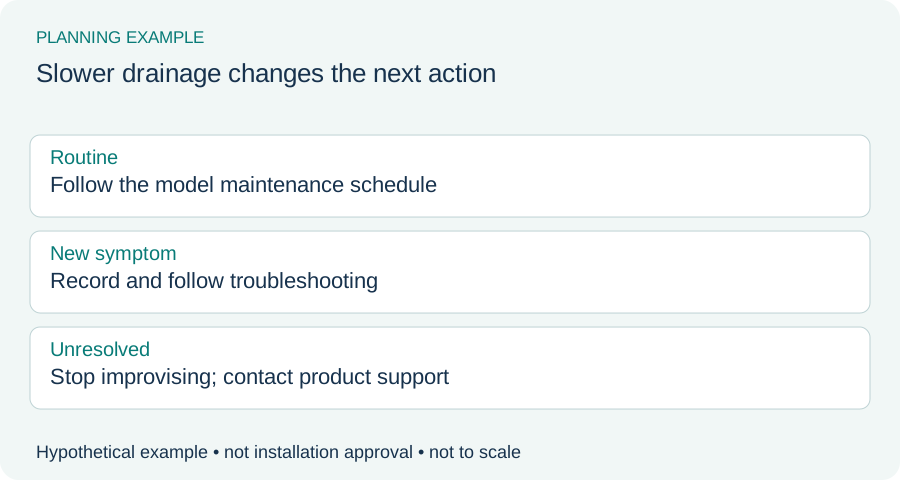
Example: slower drainage changes the next action
After several normal loads, drainage becomes noticeably slower. Do not simply extend the wash routine. Follow the manual’s shutdown and troubleshooting directions, check only user-serviceable areas, and seek support if the problem remains. Keep a short record of the symptom and model details. A routine cleaning checklist does not authorize opening sealed panels or mixing cleaning chemicals.
| Check | Record | Watch for |
|---|---|---|
| After use | Manual-directed water shutdown and drying | Residual water ignored before storage |
| Scheduled care | Model-approved cleaning and accessible filters | Generic cleaner or interval copied to every model |
| Changed behavior | Symptom, timing and support action | Repeated fault treated as normal |
See the measurements
Real products to compare with your space
These examples make the size tradeoffs easier to see. Open a product page for the complete fit verdict, setup notes, and retailer options.
BLACK+DECKER BPWM09W
One person, very tight spaces, and small loads washed often
View fit detailsHamilton Beach HBPW160
A balanced capacity for one or two people without full-size hookups
View fit detailsCOMFEE' CLV16N2AMG
Apartment shoppers who value simple controls and wheels
View fit detailsDo this before placing the order.
- Measure the destination. Include the full usable width, depth, height, and every fixed obstruction.
- Measure the working position. Add door, lid, hose, ventilation, loading, and walking clearance.
- Measure the route. Check doors, halls, stairs, elevators, corners, and the storage opening.
- Verify the exact model. Compare the manufacturer documentation with the listing before buying.
What this guide cannot decide
General maintenance cannot diagnose a leak, electrical fault, pump failure, damaged control, or warranty claim. Stop using a malfunctioning appliance and contact qualified support.