
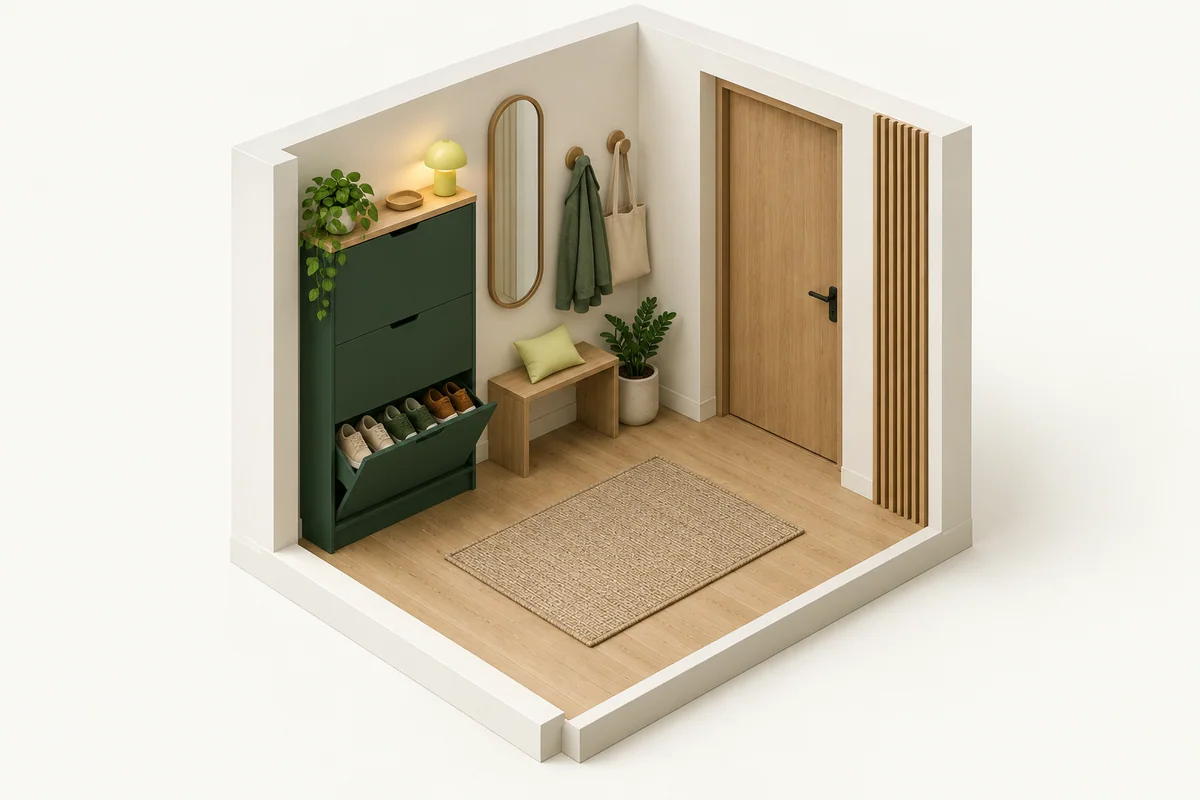
An entryway is a traffic route before it is a storage area. The right cabinet, tower, shelf, or tray must work with the open front door, bags, coats, footwear, guests, and the narrowest walking point.
The quick answer: Measure the entry with the door and storage open, then walk the intended route carrying normal belongings. Closed cabinet depth is only the starting footprint.
Plan these three things first.
Measure the route in use
Open the exterior and nearby closet doors completely. Mark trim, switches, vents, radiators, stairs, and the space a person needs while carrying groceries or a child. Record the minimum walking width after storage is installed.
Compare closed and open depth
Flip drawers and cabinet doors make a shallow closed profile but extend into the path during use. Add handles, base projection, the moving panel, and the user's standing position to the operating footprint.
Measure the actual footwear
Advertised pair counts often assume smaller low shoes. Measure the household's longest, widest, and tallest shoes, then separate boots and high-tops. Check whether dividers can adjust without weakening the intended layout.
Create a drop zone without a pile
Assign keys, mail, bags, and daily shoes to specific reachable places. Avoid a top surface that becomes a catch-all and grows into the doorway. Small trays or hooks still need mounting, load, and door-clearance checks.
Stabilize tall shallow furniture
A narrow cabinet can tip when doors open or weight is high. Follow assembly, leveling, loading, and wall-restraint instructions. Do not rely on the wall or adjacent furniture to hold a unit that requires anchoring.
Make the decision concrete
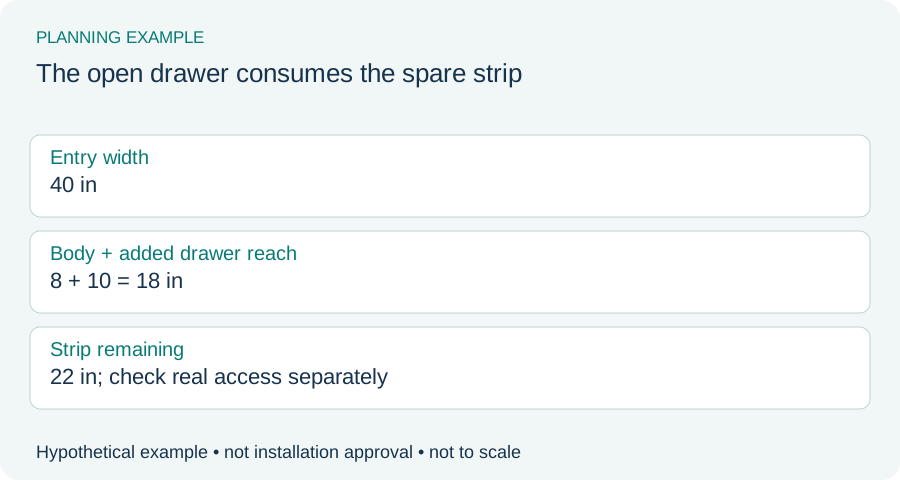
Example: the open drawer consumes the spare strip
Hypothetical entry width: 40 inches. A cabinet projects 8 inches closed and its drawer adds 10 inches beyond that closed front. The remaining strip is 22 inches before the person using it. This is not a validated passage width. Check the full door arc and required access, and avoid double-counting if the published open-depth measurement already includes the body.
| Check | Record | Watch for |
|---|---|---|
| Door arc | Full entry and closet-door movement | Cabinet works only with door partly open |
| Open depth | Wall-to-front dimension in use | Body added twice to a full open-depth figure |
| Household use | Footwear, bags and user position | Pair counts assumed to fit boots |
Try your measurements
Check one dimension at a time
Use the same direction for all three inputs: width, depth or height. Add all required extra space on that axis, including movement and manufacturer clearance. Repeat for the other axes and check obstructions separately.
Enter all three measurements. Leave required extra space blank if it is unknown; do not assume zero.
Available space − product body − required extra space = space remaining
See the measurements
Real products to compare with your space
These examples make the size tradeoffs easier to see. Open a product page for the complete fit verdict, setup notes, and retailer options.
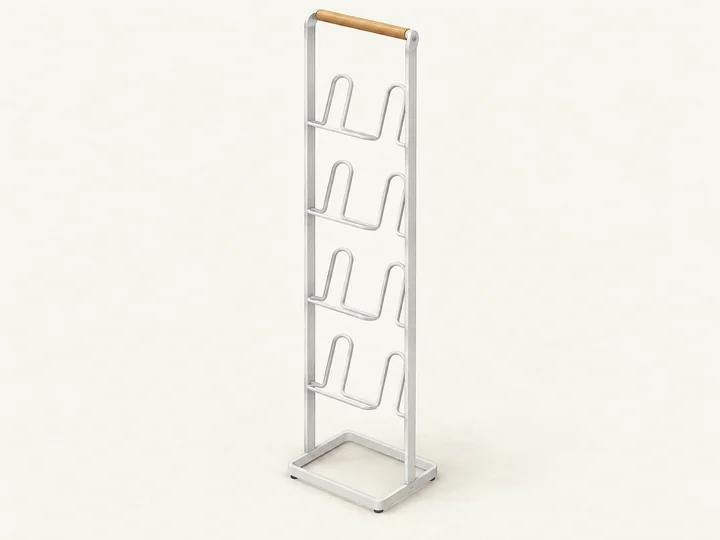
Yamazaki Home Tower Tall
Stacking five everyday pairs in less than nine inches of floor width
View fit details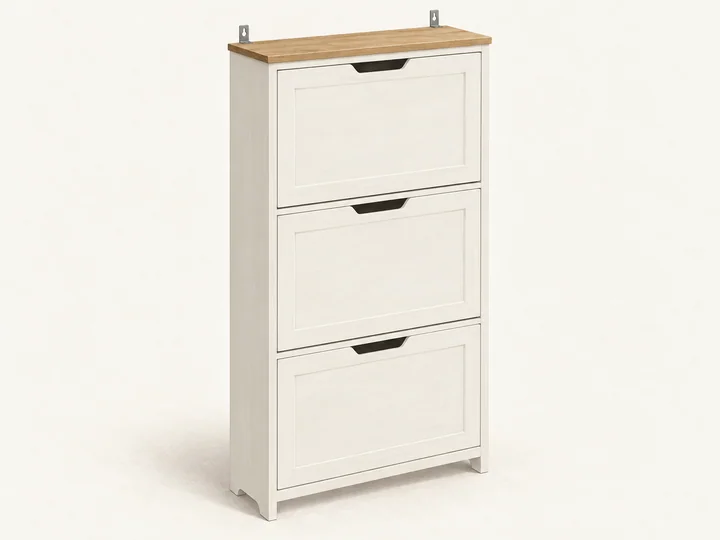
HOMCOM 837-142V80BK
A narrow hallway where concealed storage must stay under eight inches deep
View fit details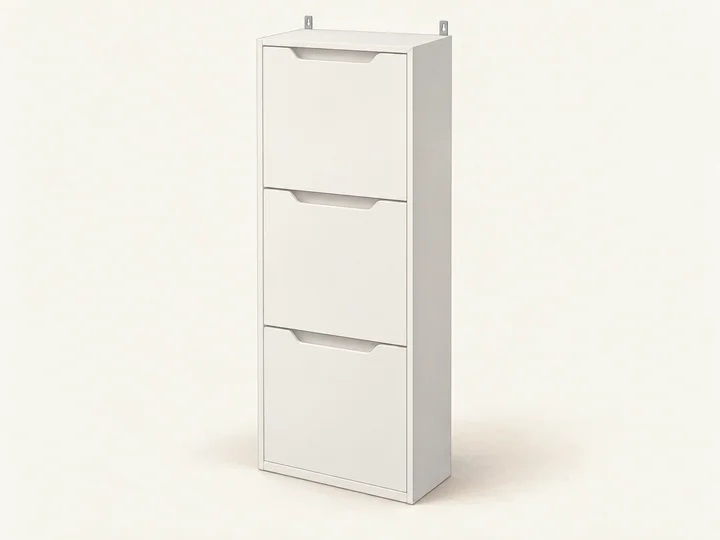
IKEA BISSA Three-Compartment
A very narrow wall run where width matters more than height
View fit detailsDo this before placing the order.
- Measure the destination. Include the full usable width, depth, height, and every fixed obstruction.
- Measure the working position. Add door, lid, hose, ventilation, loading, and walking clearance.
- Measure the route. Check doors, halls, stairs, elevators, corners, and the storage opening.
- Verify the exact model. Compare the manufacturer documentation with the listing before buying.
What this guide cannot decide
This guide cannot determine a code-compliant exit width, approve wall fastening, or guarantee that a cabinet safely holds a specific collection of footwear and belongings.